Showing posts with label comedy. Show all posts

2026-07-12

PAM's first feature animation.

PAM stands for Poses Audio Motion (pam github repo). See the reference manual for more.

Stills from a nerdy movie, and the even nerdier way it was made.

The animation embedded below was not edited together in the usual sense. Nobody dragged a clip onto a timeline, nudged a keyframe, or clicked a render button in an animation package. The entire film — every character, prop, line of dialogue, camera focus, scene transition, and sound cue — is described in a single text file: a screenplay written in JSON. A Python module reads that file and produces the finished video. The movie is compiled, not edited.

"Too Nice to Die" on Youtube

Click the above link to watch the 100 minute film.

The screenplay is the source code

The screenplay is an ordered list of actions. Here is an actual excerpt — a character enters, walks to her mark, and speaks:

{"action": "fade_in", "who": "nona", "offset": [-6.0, -2.0, 0.0]},
{
   "action": "walk_to", 
   "who": "nona", 
   "x": -2.25,
   "sfx": "sfx/cue-nona.mp3", 
   "sfx_duration": 2.0
},
{
   "action": "say", 
   "who": "nona",
   "text": "Chekov will confirm.",
   "hold": 2.0,
   "sfx": "sfx/cue-nona.m4a", 
   "sfx_duration": 1.0
}

That (and about 45000 lines not shown here:-) is the whole authoring interface. There is no hidden project file, no binary scene format, no GUI state. If it isn't in the JSON, it isn't in the movie. Even the sound design works this way: each action can carry an inline sound cue (with gain and trim parameters), so the film's roughly 1600 audio events are just more keys in the same text file.

The player: one command, whole film

The Python module that interprets the screenplay is PAM (Python Animation Maker), built on top of the Manim mathematical animation library — yes, the one used for math-explainer videos. PAM adds stick-figure characters with poses, faces, walk cycles, speech bubbles, props, a dog, and a talking dodecahedron, all driven by the action vocabulary above. Rendering the feature is a single shell command:

PAM_SCRIPT=SCREENPLAY_FILENAME manim --disable_caching -ql pam_player.py PAMPlayer

No mouse. No further keyboard input. Some time later, out comes an MP4 with the soundtrack already mixed in.

Why do it this way?

The film is versionable. The screenplay lives in a git repository like any other source file. A change to the movie is a diff — readable, reviewable, revertible. When I recently tightened all the scene transitions, the entire edit was a script transforming one JSON file into another, and it could be verified the same way software is verified: by checking, mechanically, that every scene still starts with exactly the same characters on stage as before.

The film is reproducible. Anyone with the repository and the sound files can render the identical movie. There is no "project file that only opens on my machine."

Fixes are surgical. When a character faced the wrong way in one scene — a stick figure looking left while talking to a dog standing to her right — the fix was changing the string "lside" to "rside" on two lines. Re-render, done.

And honestly: it's the natural medium. A screenplay was already a formal, structured document before computers existed. Sluglines, action lines, dialogue — screenwriters invented a domain-specific language a century ago. JSON just makes the compiler possible.

The pipeline, end to end

Scenes start life in Fountain, the plain-text screenwriting format, extended with annotation keys for moods, camera focus, sounds, and captions. A converter (fountain2pam.py) turns that into the JSON action list; the player turns the JSON into video; the video goes to YouTube. Text all the way down, until the last step.

The screenplay for the film above, the player, and the reference manual are in the PAM repository if you want to see how deep the rabbit hole goes — or render your own. Bring your own dodecahedron.

2025-05-16

The Battle of Pythagorean Numbers

A goofy story of numbers ...

The morning fog hung low over the battlefield as Commander Square 190 rolled to the front lines, his perfectly square armor gleaming in the early light. Above them all, the giant scoreboard flickered:

"Harmony and goodness: 42 | Chaos and Evil: 64."
Odd squares and equilateral triangles and circles surround the square, listening intently.

"Listen up, Odds! We're behind the Evens!" the Commander Square bellowed, his compass-point helmet spinning nervously. "The evil Evens, the forces of Chaos, have pushed us back with their non-Euclidean tactics!"

Circle Scout darted forward, hyperventilating. "Commander! Eight evil Even enemies approach from the east! Let us all pray for the power of perfect numbers, 6, 28, 496 —" he shouted to the heavens.

"Calm yourself, Scout," Commander Square said, his voice as steady as Euler’s constant. "Remember your training. Breathe to the count of the first five Fibonacci numbers."

Triangle Warrior stomped forward, his blocky shoulders squared perfectly at 60-degree angles. He thumped his Laplacian chestplate. "Let me at 'em, Commander! My 4×4 matrix hammer is ready to seriously smash some decimal points!"

From across the battlefield, a menacing Even General Pyramid with far too many sides and components shrieked. "Your pathetic numerical harmony is doomed! Chaos reigns!"

Commander Square narrowed his radius. "Triangle, take your division battalion and flank them from the right with fluxions. Circle, your fractional forces will create a distraction with those numerator number catapults."

Triangle saluted with his angular arm. "And you, sir?"

"I'll lead the arithmetical assault with our triangular number troop,” Square said. “Those of us who are sums of square numbers will show them the meaning of true mathematical harmony!"

Circle Scout bounced nervously on his diameter. "But Commander, what if they deploy their... unsolvable equations?" He whispered the last words with terror.

Commander Square's circumference stiffened. "Then we'll do what mathematicians have always done—simplify, reduce, and solve step-by-step."

As they moved into position, Circle caught a glimpse of the banner fluttering in the algebraic wind:

"Rithmomachia: Where Math Is Always Right!"
Triangle Warrior hefted his multiplication hammer. "For Pythagoras!" he bellowed.

They charged across the field, geometric shapes of all kinds clashing in a spectacular array of mathematical operations. Square bashed a chaotic trapezoid with a mighty matrix hammer, shouting, "That's 4x4 damage—calculate that!"

Circle Scout leapt over enemies, dropping division symbols like land mines. "Can't step on these without solving them first!" he cackled.

Commander Square rolled through the fray, his geometric ratio shield deflecting diabolical denominators. He engaged the many-sided General Pyramid of Chaos, their weapons clashing in a shower of mathematical symbols.

"Your random numbers can't defeat the power of mathematical harmony!" said Square parrying a fractional number thrust.

The Even General Pyramid cackled. "Fool! There will always be chaos in mathematics! What about imaginary numbers? What about infinity?"

Square smiled. "That's the beauty of it. Even those fit into the patterns. Everything in mathematics connects—you just need to learn the rules!" With a powerful thrust of his compass sword, Commander Square solved the evil General Pyramid's equation.

The chaotic Pyramid's angles collapsed in on themselves as he shouted, "Impossible! My calculations were perfect!"

"No," replied Commander Square. "They were just incomplete."

Above them, the scoreboard flickered and changed:

"Harmony and goodness: 81 | Chaos and evil: 64"
As the remaining chaotic shapes retreated, Circle and Triangle joined their commander.

Circle thumped a round chest plate. "Victory through radial vectors!"

Triangle couldn't stand still. "Did you see me? I was adding and subtracting so fast they couldn't keep up with my calculations!"

Commander Square surveyed the battlefield, where defeated shapes were being tutored in proper mathematical principles by the victors. "Remember, Odds —- in Rithmomachia, we don't just defeat our enemies."

"We teach them," Square nodded solemnly.

"And we learn from them," Triangle added, examining a fascinating fractal pattern left behind by a fleeing chaotic shape.

Circle smiled as new recruits began to gather around them, eager to learn the ways of mathematical harmony.

"That's right," Square said. "Because the real victory in Rithmomachia isn't just winning..."

Triangle and Circle smile and nod.

"...it's understanding!" Square declares proudly.

The End

2023-05-24

Scene-by-scene breakdown of "The Ladykillers" (2004)

This film was written (screenplay only) by the Coen brothers, Ethan and Joel, based on a story by William Rose, and directed by the Coen brothers.

Scene-by-scene breakdown

Time: 1990s

Place: Mississippi

  1. Widow Mrs Munson enters the town police station where Sheriff Wyner is resting behind his desk. She reports a neighbor playing loud hip-hop music. After stating several obscure biblical references, she leaves. The Sheriff is puzzled by the meaning of the lesson she’s trying to convey.
  2. She returns home, where she lives alone with her cats. The backyard of her home runs down to the river and the casino office where money is processed. Professor Dorr rings her doorbell and, after a comical scene involving her cat Pickles, he asks about her room to rent. After viewing her root cellar he asks to move in and to practice music in the cellar with his friends, She agrees and he then leaves. In this scene we learn of Mrs M’s love for the church and Bob Jones University.
  3.  Various scenes, not really a montage, introduce Prof Dorr’s “musician” friends, the “Gang”: Hudson (young, strong, not very bright), Gawain (confident but impulsive), the General (hard working, fit), and Pancake (explosive expert). Gawain has gotten a job working for the casino as a janitor, with access to the money room.
  4.  Mrs Munson attends church and listens to a lively baptist gospel choir and a sermon. We learn how devoted she is.
  5. Prof Dorr and his friends arrive to practice in the root cellar. They each bring musical instrument cases. They play a boom box to pretend they are practicing. Instead they plan the casino robbery.
  6.  A series of shots showing the Gang at work digging a tunnel and emptying bags of dirt taken out of the root cellar.
  7.  Back at Mrs Munson’s house, she knocks on the cellar door. They comically hurry to get seated to pretend they were practicing. She came to show Prof. Dorr the fife carved out of wood by her deceased husband. She reminiscences over her husband in a touching scene.
  8. Gawain follows a pretty young casino patron and, in an attempt to complement her, won’t stop catcalling her with sexual suggestions. He is fired immediately by his boss, Mr Grudge.
  9. The Gang gathers in a Waffle Hut to try to figure out what to do. They decide to get Gawain rehired by giving Grudge a bribe. Pancake’s girlfriend, Mountain Girl, joins the team.
  10. Prof. Dorr and Mrs Munson listen to music in her sitting room.  He reads, she knits, and the rest of the Gang prepares an explosion to remove a rock that is blocking the tunnel-digging efforts. Dorr gives Mrs M tickets to a gospel concert in Memphis and has paid for transportation for her. (The plan is the the explosion will occur when she is away.)
  11. Knock, knock! Sheriff Wyner appears at the door, telling her he has spoken to the neighbor about the noise. She invites him in. He enters but Prof. Dorr has disappeared. (He has hidden under his bed until the Sheriff leaves.)
  12. At the casino offices, Gawain presents Mr Grudge with a box of chocolates, a card with an apology and a $100 bill. Grudge allows him back for a 1 week probationary period.
  13. The Gang works on the tunnel in the root cellar of Mrs Munson’s house. Pancake is drilling a rock with a power drill. He tries to relate to Gawain, but merely gets into an argument with him. Mrs. Munson knocks at the door. They rush to take their seats and turn off the boombox. Mrs Munson carries cookies downstairs, announcing she is about to leave with her friend to see the gospel choir concert.. The Gang each take a cookie politely and Prof. Dorr escorts her back upstairs.
  14. The rest of the Gang discusses the detonation procedure, which Pancake plans to set off once Prof. Dorr returns.
  15. It is now night time. In the front yard, Prof. Dorr escorts Mrs M and her friend to their waiting limo, telling them a story about his crazy father. Just as the ladies get in the limo, there is an explosion coming from the direction of the house. This noise alarms Mrs M but Prof. Dorr comically tries to calm her down and get her on her way to the gospel concert.
  16. Dorr rushes inside, greeted by smoke and chaos. Pancake has blown off a finger. Unseen by the Gang, the cat has found the missing finger and has run off. Dorr and the others take Pancake outside and tell Mrs M that Pancake has caught his finger in the sackbut (a musical instrument) and they will rush him to the hospital. Pickles runs up a tree with the finger and the General chases after him. They urge her to leave to catch her concert, promising that the General will fetch Pickles. She does.
  17. Now bandaged, Pancake and Dorr discuss the blasting and that they are on track to penetrate the vault of the casino that afternoon.
  18. Gawain wheels his garbage bin across the casino floor.
  19. Simultaneously, Mrs Munson sings at her church choir practice.
  20. Gawain is inside the vault room. He hears a power drill from the other side of the wall. A drill bit breaks through.
  21. Simultaneously, Mrs Munson continues singing at choir practice.
  22. Pancake and the General stuff bills into garbage bags. Gawain gawks at all the cash. Pancake’s stomach grumbles. He has IBS and it’s an emergency. Gawain helps him get to a bathroom.
  23. The General, Hudson, and Pancake take bags of money through the tunnel back to Mrs M’s root cellar. While they do that, Gawain patches up the wall to the vault.
  24. Simultaneously, Mrs Munson is finished and leaves her church choir practice.
  25. Pancake, Hudson and the General return to the root cellar, greeted by Prof Dorr. They celebrate with a drink. Pancake looks at his watch and wonders why the detonation to close the tunnel has not gone off.
  26. Simultaneously, Mrs Munson returns home and makes a cup of tea.
  27. Pancake re-enters the tunnel to check on the detonation fuse. He fiddles with it and the timer starts. He gets out of the tunnel as fast as possible.
  28. Simultaneously, Mrs Munson returns home and prepares for a tea party.
  29. Just as Pancake reaches the root cellar the detonation blasts him out of the tunnel.
  30. Upstairs, Mrs Munson feels the explosion and tries to figure out what just happened. She goes to the cellar door, goes down the steps and sees the smoke and a lot of money. She tells Prof. Dorr that she needs to have a talk with him. Her doorbell rings. She looks at the General and tells him, “I told you not to smoke.” She returns up the cellar door.
  31. (page 64 or 91) She answers her front door. A bunch of her friends from church enter.
  32. Downstairs, the Gang is scared, except for Prof Dorr. They are concerned Mrs M knows what they are doing. “She saw the hole,” one says. Prof. Dorr puts on maximum charm and walks up the stairs to the living room.
  33. Prof Dorr asks Mrs Munson for a moment to speak with her privately. Mrs Munson hishes him up and tells him to go back downstairs. She shall go down and speak with him shortly. He leaves. She tells her church friends, “He’s the tenant.”
  34. Prof Dorr goes downstairs to his chastised Gang. When Mrs M joins them she treats them like misbehaving teenagers. She insists they come up and play their musical instrument for her group of church ladies. They go upstairs, without Gawain (who is still in the casino offices). Prof Dorr begs off a musical recital and offers a recital of a poem of Edgar Allan Poe instead. At the end of the poem, Gawain arrives.
  35. The Gang says goodbye to the group of ladies. Mrs M now wants to know what has been going on downstairs. Prof Dorr tells her a story of the General’s cigarette lighting up a natural gas “motherlode”. As for the money, Dorr says it’s Pancake’s money. He needs the cash to pay for an operation for his common law wife and doesn’t trust banks. Mrs M doesn’t believe it and plans to call the Sheriff. Dorr begs to talk with her in private.
  36. They go to the living/sitting room. Dorr confesses that they are criminals but the casino’s money is insured. The insurance company will spread its loss over its other customers at a cost of only a penny each. However, if she lest them leave they will contribute a large sum to Bob Jones University. She thinks about it but doesn’t agree. She says give the money back or I’ll call the police. Also, they must all attend church with her next Sunday.
  37. Prof Dorr returns to the cellar and discusses it with his Gang. They decide that one of them must kill her. They draw straws. Gawain gets the short straw.
  38. As Gawain sneaks behind Mrs M, with a gun hidden behind a pillow he has a flashback to when he wanted a puppy and his mom slapped him over and over while his siblings watched. Mrs M turns around and confronts him, telling him she’s displeased that he’s gotten involved with that white trash. Gawain slinks back downstairs.
  39. Gawain confesses she reminds him of his mother and he can’t do it. He and Pancake get in a fight. Gawain shoots himself in the process and dies.
  40. While Prof Dorr distracts Mrs Munson, the general and Hudson carry Gawain, in a large trash bag, out of the house and into their car (a hearse, in fact). They drive off to dump Gawain’s body. Prof Dorr tells Mrs Munson that they plan to return all the money tomorrow morning and to attend church with Mrs M next Sunday.
  41. On a bridge over the river, Hudson and the General dump Gawain’s body into a garbage boat heading out to the nearby garbage dump.
  42. As Hudson and the General return, Pancake sneaks out with the money, planning to meet Mountain Girl in a waiting VW bus. The General catches him and kills him before he gets away.
  43. Prof Dorr watches on the same bridge as the General and Hudson dump Pancake’s body into a passing garbage boat.
  44. They return to the cellar and draw straws once again for who should kill Mrs Munson. The General gets the short straw.
  45. Just as he is about to strangle the sleeping Mrs Munson in her 2nd story bedroom he accidentally swallows his cigarette and stumbles quietly out of the bedroom and falls down the stairs, dead.
  46. Prof Dorr and Hudson look at the General, dead. Dorr tells Hudson he must finish the job. Hudson says he can’t kill an old lady. He’d rather go to prison. Dorr says if he must do it himself, he will keep all the money. Hudson says he can’t allow Dorr to hurt the old lady. Dorr says he’s the brains and runs the operation, while he is just a stupid boy. Hudson points a gun at him. Saying (as in the 1955 version), “Who looks stupid now?” Hudson pulls the trigger but nothing happens. Hudson looks into the chamber of the gun and BANG, he shoots himself dead.
  47. On the bridge, Prof Dorr dumps the body of Hudson onto a garbage boat. Just then a piece of masonry from the bridge falls and hits Dorr on the head, knocking him over the railing, his body falling into the garbage boat below.
  48. The next morning, Mrs Munson goes to Sheriff Wyner and tells him of the robbery and the money left in her basement. He doesn’t believe her. As in the 1955 film, she says she should just keep it.

2023-05-11

The "Thin Man" series, according to AI

The Thin Man series is one of my favorites, so I thought I'd ask ChapGPT for a summary. It did a good job! I've added a few details but overall, AI really helped with this blog post.
"The Thin Man" is a classic detective comedy film series from the 1930s and 40s that features the husband-and-wife detective team of Nick and Nora Charles (played in each movie by William Powell and Myrna Loy). Here's a summary of each movie in the series:
  1. "The Thin Man" (1934): This film introduces Nick and Nora Charles, a witty and sophisticated couple who solve a murder mystery while drinking martinis and cracking jokes. Nick is a retired detective, and Nora is a wealthy socialite, and together they make a formidable team. The plot revolves around the disappearance of an eccentric inventor and the various suspects who may have wanted him dead. This one was based on the novel of the same name by Dashiell Hammett. Directed by W. S. Van Dyke, with a screenplay by husband and wife team Albert Hackett and Frances Goodrich.
  2. "After the Thin Man" (1936): In this sequel, Nick and Nora return to San Francisco after a trip to New York and find themselves embroiled in another murder case. The victim is a socialite with a troubled past, and the suspects include her former lovers and a gangster who may have been involved in her husband's murder. Once again, Nick and Nora use their charm and wit to uncover the truth. This was based on a story Dashiell Hammett. Again, it was directed by W. S. Van Dyke, with a screenplay by Albert Hackett and Frances Goodrich.
  3. "Another Thin Man" (1939): This film finds Nick and Nora in New York with their new son, Nick Jr. They become involved in a murder case when Nora's cousin is accused of killing her husband. The investigation leads them to a wealthy family with dark secrets and a dangerous gangster who may be connected to the crime. This also was based on a story Dashiell Hammett. Again, it was directed by W. S. Van Dyke, with a screenplay by Albert Hackett and Frances Goodrich, with Anita Looos also contributing to the screenplay (uncredited).
  4. "Shadow of the Thin Man" (1941): Nick and Nora are back in San Francisco, where they attend a baseball game and witness a murder in the stands. The victim is a jockey with a checkered past, and the suspects include his ex-wife, his former boss, and a group of gamblers. Nick and Nora use their wits and charm to unravel the mystery, with some help from their son Nick Jr. Again, this also was directed by W. S. Van Dyke. However, in this case the (original, except for the characters) screenplay was written by Harry Kurnitz and Irving Brecher.
  5. "The Thin Man Goes Home" (1945): In this installment, Nick and Nora travel to Nick's hometown in upstate New York for a family reunion. While there, Nick becomes embroiled in a murder case involving a wealthy art collector and his scheming family. Nora provides her usual support and wit as Nick tries to solve the case and clear his family's name. As W. S. Van Dyke passed away in 1943, a new director was used for this film. This one was directed by Richard Thorpe. The screenplay was written by Robert Riskin and Dwight Taylor, based on a story by Riskin and Harry Kurnitz.
  6. "Song of the Thin Man" (1947): In the final film of the series, Nick and Nora attend a jazz club and become involved in a murder case when one of the musicians is killed. The suspects include the victim's wife, his bandmates, and a wealthy socialite with a shady past. Nick and Nora work together to solve the case, with some help from their old friend Lieutenant Abrams. This one was directed by Edward Buzzell. The screenplay was written by Steve Fisher and Nat Perrin (with contributions by James O'Hanlon and Harry Crane), based on a story by Stanley Roberts.

2022-10-10

Favorite rom coms

I'm not an expert on this genre, but I've watched my share of them and here are my favorite rom coms, in no particular order.
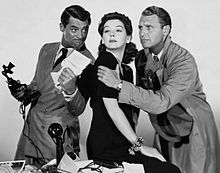
  • Perhaps my favorite movie of all time: His Girl Friday. This is in the public domain and can be found in several places, including youtube. I've raved about it lots of times on this blog, for example, here.
  • Almost any Preston Sturges movie (where he's the writer/director). I'm going to put one of the most obscure ones, The Sin of Harold Diddlebock. I think it's in the public domain (in the US) because of some copyright law error, so might be available free on youtube. See also this review for more details on which this is such a wonderful movie.
  • Not because it's super-romantic, but because it's such a great movie: Groundhog Day!
  • Among several possible Billy Wilder movies, I'll pick two: Sabrina (co-written by Ernest Lehman, who's appeared elsewhere on this blog, for example here) and The Apartment
  • IMHO, this is a no-brainer: The Big Sick. So funny, so very touching. Reminds me of the touching bromance Funny People.
  • Hitchcock did only one movie that is purely rom com (Mr and Mrs Smith, 1941), but the thriller masterpiece North by Northwest has enough rom com elements, that I'm including it on this list.
If you haven't seen these, check them out!

2021-10-18

3 act breakdown of "Meet the Robinsons"

Let's look at one of my favorite movies, the inventive and energetic Disney animation, Meet the Robinsons (2007).
While overall quite a lot of fun, with a strong emotopnal theme, terrific music and memorable visuals, IMHO the film is complicated by too many subplots that don't contribute to the emotional core of the story. The description below skips a lot of these subplots. For a sequence breakdown that includes these details, see the blog post by Kirby Kirby Marshall-Collins, From Okay, But: A “Meet the Robinsons" Scene-by-Scene Breakdown. Despite these issues with subplots (which are IMHO relatively minor flaws in the story-line, but others may disagree), this is still one of my favorite movies.

The breakdown below follows the O'Bannon model [OL12], emphasizing the protagonist's Dramatic Problem arising from the Inciting Incident and the Point of No Return.

Note: The film goes back and forth in time using both flashbacks and a time machine. This in itself presents it's own set of plot problems which I'm also going to ignore.

Act 1: The Conflict.

Our protagonist Lewis (later renamed Cornelius) is 12, an energetic, science prodigy, and apiring inventor who's so far has spend his life in an orphanage. His roommate is Goob, another orphan who loves baseball.

So many potential adoptive parents have rejected him, Lewis is convinced that no one wants him. Mildred (voiced by the awesome Angela Bassett), the house mom of the orphanage, counters that they don’t know that; maybe his mom just couldn’t keep him. Lewis was the only one who saw her, so he decides to build an invention, his Mind Scanner, to look into the past and find his mom.

Lewis works on his Mind Scanner over months, keeping poor Goob up most nights building it. Finally, it’s the day of the InventCo-sponsored science fair. Goob can hardly stay awake but has an important event as well, a baseball game (he plays outfield). In fact, Goob falls asleep in the outfield and is, in fact, hit in the head by an easily caught ball. Because of that, they lose the game and his teammates are mad at him. Goob blames it all on Lewis, vowing revenge. Goob goes up hating Lewis.

At the science fair, an InventCo scientist, Mrs Lucille Krunklehorn (voiced by the legendary Laurie Metcalf) is a judge. Lucille's husband Bud will be important later but is not shown until later. (Bud and Lucille will later adopt Lewis/Cornelius.) Lewis barely notices young Franny, who has entered trained frogs into the science competition. (Lewis will later marry Franny the frog trainer.)

Lewis sets up his Mind Scanner machine. From the future, Bowler Hat Guy (BHG), an older and very disgruntled version of Goob, has arrived using a stolen Time Machine. Goob/BHG wants to steal Lewis' invention because he hates Lewis. Lewis' future 13-year old son Wilber follows BHG into the past in another Time Machine to try to stop him. (In this future, there are only two such Time Machines and the stolen Time Machine was Wilber's responsibility.)

In some sense, this defines BHG/Goob as the antagonist. This can also be regarded as the inciting event.

After BHG/Goob steals the Mind Scanner and returns to the future, Lewis is devastated. Wilber tells Lewis he's from the future and has a Time Machine. Lewis doesn't believe him. To prove it, Wilber tosses Lewis into his Time Machine and they fly away.

While traveling to the future, Lewis realizes he doesn't need a Mind Scanner, he can just use the Time Machine to see his mom. Wilber and he get into a fight over this and they crash the Time Machine in Wilber's front yard. Wilbur wants Lewis to fix the machine. Lewis bargains that if he fixes the time machine, Wilbur will take him back to see his mom. Wilbur agrees.

This is the Lock in.

Act 2: The Conflict intensifies.

Bowler Hat Guy attempts to pass off the Memory Scanner as his own at InventCo, but the CEO says he "hasn’t thought this through." (A recurring joke.) He can’t even figure out how to turn it on. They throw him out the doors of InventCo HQ.

Wilbur and Lewis push their broken machine into the garage. Even though Lewis keeps failing, Wilbur simply says, "Keep moving forward," his dad’s motto. Also, based on an actual quote:

We keep moving forward, opening new doors, and doing new things, because we're curious and curiosity keeps leading us down new paths. -- Walt Disney
Bowler Hat Guy arrives outside, undetected. BHG uses a robotic hat to control Frankie, leader of Frannie's frogs. Frankie approaches the table to get Lewis, but he can’t capture him since he’s too small. Frankie warns BHG hasn’t thought this through. (Recurring joke 2.)

This failing, BHG (again using a robot hat) decides to get a dinosaur, a life-sized T-Rex, to get Lewis. The Robinsons band together to save Lewis from the T-Rex. T-Rex corners Lewis outside, but "big head and tiny arms" means that it can't grab Lewis. T-Rex warns BHG hasn’t thought this through. (Recurring joke 3.)

Franny and the other Robinsons invite Lewis to join their family. He's elated. Wilbur confesses the truth about the Time Machines. Realizing now who Lewis really is, they decide he needs to go back to his time and life his life.

Unfortunately, before this can happen, BHG/Goob captures Lewis. He offers to take Lewis to see his mom if Lewis fixes the Memory Scanner. Lewis fixes his Memory Scanner and learns BHG is Goob in the future. Lewis learns disgruntled future Goob knew just the moment to go back to, so as to ruin Lewis' life. Lewis tells BHG he's sorry about the baseball game and that if he’d let go of the past and kept "moving forward" his life would’ve turned out better. BHG would rather blame Lewis. (This also establishes part of Lewis' character arc.)

Done with Lewis, BHG takes Lewis to the now empty orphanage building (still in the future) and dumps tied up Lewis on the roof of the orphanage. Wilber recovers Lewis from BHG, stealing back the Mind Scanner as well. They almost make it back to the Robinson home when BHG/Goob catches up to them and takes back the Mind Scanner. BHG tries to remarket the working Mind Scanner to InventCo. BHG shows the scanner and signs the paperwork with the InventCo executives. This changes the future, causing Wilber to stop existing.

Before Wilber disappears, he tells Lewis that it's up to him - he must fix the Time Machine in the garage and go back to the science fair and stop BHG from originally stealing the Mind Scanner.

The world is darker. Lewis rushes into the Robinson garage. No one is there. The only thing there is a screen that shows what happened in the new dystopian future.

This is the Point of No Return.

Act 3: The Resolution.

Lewis scrambles to fix the machine, as the world gets darker and darker. Lewis goes back to the past, not to his birth mom but to the InventCo-sponsored science fair to stop BHG from taking his Mind Scanner.

Lewis stops on his way to the science fair to wake up Goob at the baseball game, who is sleeping in the outfield. Goob wakes up just in time to catch the ball and save the game. Everybody cheers for him!

At the science fair, Lewis pleads for one more chance. Lucille whispers a date to Lewis to plug in. The memory scanner works perfectly, showing her wedding to Bud, who has just arrived at the fair to drive Lucille home. A frog lands on Lewis, and Franny and Lewis finally notice each other. She asks if he thinks she’s crazy for training frogs to sing. He says no, and it's love at first sight.

Lucille and Bud love Lewis and decide to adopt him, but rename him "Cornelius." They move Cornelius into their house and show him what room will be the lab.

The emotional ending is accentuated by music from Little Wonders by singer/songwriter Rob Thomas.

Bibliography:
[OL12]Dan O'Bannon and Matt Lohr, Dan O'Bannon's guide to screenplay structure, Michael Wiese Productions, 2012.

2021-01-19

A selection of adapted comedies

I'm leaving out movie sequels (such as Toy Story 3), remakes not based on a novel (e.g., based on another movie, such as James Cameron's True Lies, Blake Edwards' Victor/Victoria or Billy Wilder's Some Like It Hot), or movies adapted from TV series (such as Borat or In the Loop). While they are technically adaptations, I'm focusing more on feature film adaptations from books or plays where the main language is English.

Based on Novels/Books
  1. Yes Day (2021), based upon the 2009 children's book of the same name by Amy Krouse Rosenthal and Tom Lichtenheld. [justwatch.com]
  2. Emma (2020) and Emma (1996), based on the 1815 novel of the same name by Jane Austen. [justwatch.com for 2020 version, justwatch.com for 1996 version]
  3. How to Build a Girl (2019), based on her 2014 novel of the same name written by Caitlin Moran who also wrote the script. [justwatch.com]
  4. JoJo Rabbit (2019), based on the 2008 novel Caging Skies by Christine Leunens. Screenwriter Taika Waititi (who also acted in and directed the film) won the Academy Award for Best Adapted Screenplay. [justwatch.com]
  5. BlacKkKlansman (2018), based on the 2014 memoir Black Klansman by Ron Stallworth. [justwatch.com]
  6. Crazy Rich Asians (2018), based on the 2013 novel of the same title by Kevin Kwan. [justwatch.com]
  7. A Futile and Stupid Gesture (2018), based on Josh Karp's 2006 (non-fiction) book of the same name. [justwatch.com]
  8. Freaky Friday (2018) and Freaky Friday (2003) and Freaky Friday (1976), all based on the 1972 children’s novel of the same name written by Mary Rodgers. The 2018 version is a musical. There is also a 1995 made-for-TV version. [justwatch.com for 2018 version, justwatch.com for 2003 version, justwatch.com for 1976 version]
  9. The Little Hours (2017), loosely based on the first and second stories of day three of ten of The Decameron, a collection of novellas by Giovanni Boccaccio, a 14th-century Italian writer. [justwatch.com]
  10. Love & Friendship (2016), based on Jane Austen's epistolary 1794 novel Lady Susan. [justwatch.com]
  11. Maggie's Plan (2015), based on an original story by Karen Rinaldi (later published as the 2017 novel The End of Men). This script, written by Rebecca Miller, is published in book form and available from amazon.com. [justwatch.com]
  12. The DUFF (2015), based on the 2010 novel of the same name by Kody Keplinger. [justwatch.com]
  13. Hector and the Search for Happiness (2014), based on François Lelord's novel of the same name (published in 2002, translated to English in 2010). [justwatch.com]
  14. Inherent Vice (2014), based on Thomas Pynchon's 2009 novel of the same name. Paul Thomas Anderson's script was nominated for an Academy Award for Best Adapted Screenplay. [justwatch.com]
  15. Silver Linings Playbook (2012), based on Matthew Quick’s 2008 novel of the same name. David O. Russell was nominated from an Academy Award for Best Adapted Screenplay. However, he won the BAFTA Award for Best Adapted Screenplay. [justwatch.com]
  16. Pitch Perfect (2012), loosely based on Mickey Rapkin's 2009 non-fiction book, titled Pitch Perfect: The Quest for Collegiate a Cappella Glory. [justwatch.com]
  17. Warm Bodies (2013), based on Isaac Marion's 2010 novel of the same name (which in turn is inspired by Shakespeare's play, Romeo and Juliet). [justwatch.com]
  18. Red (2010), loosely inspired by the 2003-2004 Homage Comics limited series of the same name by Warren Ellis and Cully Hamner. [justwatch.com]
  19. Julie and Julia (2009), based on two books: My Life in France, Child's 2006 autobiography written with Alex Prud'homme, and a 2005 memoir by Powell, Julie and Julia: My Year of Cooking Dangerously. The screenplay by Nora Ephron (who also directed) was nominated for a WGA Award for Best Adapted Screenplay. [justwatch.com]
  20. Confessions of a Shopaholic (2009), based on the first two entries in the Shopaholic series of novels by Sophie Kinsella. [justwatch.com]
  21. The Private Lives of Pippa Lee (2009), based on Rebecca Miller's 2008 novel of the same name. (While classified as a comedy/drama and technically Pippa Lee qualifies as a "comic non-hero", there aren't many laughs in this excellent film. Trivial fact: Rebecca Miller is playright Arthur Miller's daughter.) [justwatch.com]
  22. Meet the Robinsons (2007), loosely based on the 1990 children's book A Day with Wilbur Robinson by William Joyce. While poorly reviewed, this is another one of my favorite films. [justwatch.com]
  23. The Devil Wears Prada (2006), based on Lauren Weisberger's 2003 novel of the same name. Screenwriter Aline Brosh McKenna was nominated by both the WGA and BAFTA for the Best Adapted Screenplay award. [justwatch.com]
  24. The Hitchhiker's Guide to the Galaxy (2005), based Douglas Adams' 1979 novel of the same name. (That novel was, in turn, based on Adams' comedy radio show from 1978.) [justwatch.com]
  25. Mean Girls (2004), based in part on Rosalind Wiseman's 2002 non-fiction self-help book, Queen Bees and Wannabes. Screenwriter Tina Fey was nominated by the WGA for Best Adapted Screenplay. [justwatch.com]
  26. Sideways (2004), based on Rex Pickett's 2004 novel of the same name. Screenwriters Alexander Payne and Jim Taylor won the Academy Award for Best Adapted Screenplay. They also won the Award for Best Adapted Screenplay from both BAFTA and the WGA. [justwatch.com]
  27. About a Boy (2002), based Nick Hornby's 1998 novel of the same name. Screenwriters Chris Weitz and Paul Weitz and Peter Hedges were nominated for an Academy Award for Best Adapted Screenplay. [justwatch.com]
  28. About Schmidt (2002), very loosely based on the 1996 novel of the same title by Louis Begley. The screenplay by Alexander Payne and Jim Taylor was nominated for the WGA for Best Adapted Screenplay and won the Golden Globe award for best screenplay. [justwatch.com]
  29. Adaptation (2002), which is technically an adaptation (as material from the 1998 novel The Orchid Thief by Susan Orlean is used), it's really a self-referential comedy about a screenwriter and his twin struggling to write the adaptation. The screenplay by Charlie Kaufman and Donald Kaufman was nominated for an Academy Award for Best Adapted Screenplay, a WGA Award for Best Adapted Screenplay, A Golden Globe Award for Best Screenplay, and won the BAFTA Award for Best Adapted Screenplay. Note: Donald Kauffman is Charlie Kauffman's fictional brother (a character in this film), but still is given writing credit on the award. [justwatch.com]
  30. Ghost World (2001), based on the 1993-1997 comic book of the same name by Daniel Clowes. he screenplay by Daniel Clowes and Terry Zwigoff was nominated for the WGA for Best Adapted Screenplay. [justwatch.com]
  31. Shrek (2001), loosely based on the 1990 fairy tale picture book of the same name by William Steig. [justwatch.com]
  32. Bridget Jones's Diary (2001), based on Fielding's 1996 novel of the same name, which is a reinterpretation of Jane Austen's 1813 novel Pride and Prejudice. [justwatch.com]
  33. Legally Blonde (2001), based on Amanda Brown's 2001 novel of the same name. [justwatch.com]
  34. High Fidelity (2000), based on the 1995 British novel of the same name by Nick Hornby. Screenwriters D. V. DeVincentis, Steve Pink, John Cusack, and Scott Rosenberg were nominated for the WGA Award for Best Adapted Screenplay. [justwatch.com]
  35. O Brother, Where Art Thou? (2000), based on the epic poem The Odyssey by Homer. Screenwriters Joel and Ethan Coen were nominated for an Academy Award for Best Adapted Screenplay. [justwatch.com]
  36. Stuart Little (1999), oosely based on the 1945 novel of the same name by E. B. White. [justwatch.com]
  37. Election (1999), based Tom Perrotta's 1998 novel of the same name. Screenwriters Alexander Payne and Jim Taylor won the WGA Award for Best Adapted Screenplay and was nominated for an Academy Award in that category. [justwatch.com]
  38. Mansfield Park (1999), based on Jane Austen's 1814 novel of the same name. See also the 2007 made for TV film Mansfield Park, also based on the book. [justwatch.com]
  39. The Parent Trap (1998) and The Parent Trap (1961), based on the 1949 children’s novel by Erich Kästner Lottie and Lisa (originally in German, with the title Das doppelte Lottchen). [justwatch.com 1998 version, justwatch.com 1961 version]
  40. Primary Colors (1998), adapted from Joe Klein's 1996 novel Primary Colors: A Novel of Politics. The screenwriter Elaine May was nominated for an Academy Award for Best Adapted Screenplay. She was also nominated by the WGA for Best Adapted Screenplay. She won the BAFTA Award for Best Adapted Screenplay. [justwatch.com]
  41. Wag the Dog (1997), based on the 1993 novel American Hero by Larry Beinhart. The screenplay by The screenplay by Scott Frank was nominated by the WGA for Best Adapted Screenplay. was nominated by the WGA for Best Adapted Screenplay. [justwatch.com]
  42. To Die For (1995), based on the 1992 novel of the same name by Joyce Maynard, which in turn was inspired by the story of Pamela Smart. [justwatch.com]
  43. Clueless (1995), loosely based on Jane Austen's 1815 novel Emma. [justwatch.com]
  44. Get Shorty (1995), based on Elmore Leonard's novel of the same name. The screenplay by Scott Frank was nominated by the WGA for Best Adapted Screenplay. [justwatch.com]
  45. Forrest Gump (1994), based on the 1986 novel of the same name by Winston Groom. Screenwriter Eric Roth won the Academy Award for Best Screenplay Based on Material Previously Produced or Published. [justwatch.com]
  46. Mrs Doubtfire (1993), based on the 1987 novel Alias Madame Doubtfire by Anne Fine. [justwatch.com]
  47. The Player (1992), written by Michael Tolkin, based on his own 1988 novel of the same name. Tolkin was nominated for an Academy Award for Best Adapted Screenplay, nominated by the WGA for Best Adapted Screenplay, and he received an Edgar Award for Best Motion Picture Screenplay. [justwatch.com]
  48. Fried Green Tomatoes (1991), based on the 1987 novel Fried Green Tomatoes at the Whistle Stop Cafe by Fannie Flagg (who also co-wrote the screenplay). Screenwriters Fannie Flagg and Carol Sobieski were nominated for an Academy Award for Best Adapted Screenplay. They were also nominated by the WGA for Best Adapted Screenplay. [justwatch.com]
  49. Doc Hollywood (1991), based on Neil B. Shulman's 1979 book What? Dead...Again?. See also the 2006 Pixar movie Cars. [justwatch.com]
  50. Father of the Bride (1991) and Father of the Bride (1950), based on the 1949 novel by Edward Streeter. The 1950 screenplay by Frances Goodrich and Albert Hackett was nominated for an Academy Award for best adapted screenplay. [justwatch.com for the 1991 film, justwatch.com for the 1950 film]
  51. Postcards From the Edge (1990), based on Carrie Fisher's 1987 semi-autobiographical novel of the same title. Screenwriter Carrie Fisher was nominated for a BAFTA Award for Best Adapted Screenplay. [justwatch.com]
  52. The Bonfire of the Vanities (1990), based on the best-selling 1987 novel of the same name by Tom Wolfe. [justwatch.com]
  53. The Princess Bride (1987), adapted by William Goldman from his 1973 novel of the same name. His screenplay was also nominated by the WGA for Best Adapted Screenplay. [justwatch.com]
  54. Heartburn (1986), based on Nora Ephron's 1983 novel of the same name, a semi-biographical account of her marriage to Carl Bernstein. [justwatch.com]
  55. Brewster’s Millions (1985), based on the 1902 novel of the same name by George Barr McCutcheon, was adapted into a film in 1914, 1921, 1935, 1945, and 1985 (starring Richard Pryor). [justwatch.com]
  56. Fast Times at Ridgemont High (1982), written by Cameron Crowe adapted from his 1981 book Fast Times at Ridgemont High: A True Story. Crowe's screenplay was nominated for a WGA Award for best comedy adapted from another medium. [justwatch.com]
  57. Who am I This Time? (1982), based on the 1961 short story of the same name by Kurt Vonnegut (published in the Saturday Evening Post magazine, originally titled My Name is Everyone). This is another one (besides Heavy Weather) that should not be on this list -- it's a made-for-TV movie. But I love everything about it. A great film, IMHO. Try to watch it if you can. [justwatch.com]
  58. Being There (1979), based on the 1970 novel of the same name by Jerzy Kosiński. The screenplay by Jerzy Kosiński won the BAFTA Award for Best Screenplay, won for the Writers Guild Association award for Best Comedy Adapted from Another Mediumm and was nominated for the Golden Globe Award for Best Screenplay. [justwatch.com]
  59. Starting Over (1979), based on Dan Wakefield's 1973 novel of the same title. The screenplay by James L. Brooks was nominated for the Writers Guild Association award for Best Comedy Adapted from Another Medium. [justwatch.com]
  60. Who Is Killing the Great Chefs of Europe? (1978), based on the 1976 novel Someone Is Killing the Great Chefs of Europe by Nan and Ivan Lyons. The screenplay by Peter Stone was nominated for the Writers Guild Association award for Best Comedy Adapted from Another Medium. [justwatch.com]
  61. Oh, God! (1977), based on the 1971 novel of the same name by Avery Corman. Larry Gelbart's screenplay was nominated for the Academy Award for Best Adapted Screenplay and won the Writers Guild award for Best Comedy Adapted from Another Medium. [justwatch.com]
  62. Semi-Tough (1977), based on the 1972 novel of the same name by Dan Jenkins. The screenplay by Walter Bernstein was nominated for the Writers Guild Association award for Best Comedy Adapted from Another Medium. [justwatch.com]
  63. Family Plot (1976), based on Victor Canning's 1972 novel The Rainbird Pattern. The screenplay by Ernest Lehman was nominated for the Writers Guild Association award for Best Comedy Adapted from Another Medium. [justwatch.com]
  64. The Bingo Long Traveling All-Stars and Motor Kings (1976), based upon William Brashler's 1973 novel of the same name. The screenplay by Hal Barwood and Matthew Robbins was nominated for the WGA Award for Best Comedy Adapted from Another Medium. [justwatch.com]
  65. The Apprenticeship of Duddy Kravitz (1974), based on the 1959 novel of the same name by Mordecai Richler. The screenplay by Mordecai Richler and Lionel Chetwynd won the Writers Guild Association award for Best Comedy Adapted from Another Medium. [justwatch.com]
  66. Paper Moon (1973), adapted from the 1971 novel Addie Pray by Joe David Brown. The screenplay by Alvin Sargent was nominated for an Academy Award for Best Screenplay – Based on Material from Another Medium. It won the WGA Award for Best Comedy Adapted from Another Medium. [justwatch.com]
  67. Pete and Tillie (1972), based on based on the 1968 novel Witch’s Milk by Peter De Vries. Screenwriter Julius J. Epstein was nominated for an Academy Award for Best Adapted Screenplay. [not listed on justwatch.com]
  68. Travels with My Aunt (1972), loosely based on the 1969 novel of the same name by Graham Greene. The screenplay by Jay Presson Allen and Hugh Wheeler was nominated for the Writers Guild of America Award for Best Comedy Adapted from Another Medium. [justwatch.com]
  69. A New Leaf (1971), based on the short story The Green Heart by Jack Ritchie (John George Reitci), which first appeared in Alfred Hitchcock's Mystery Magazine, March 1963. The screenplay by Elaine May was nominated for the Writers Guild of America Award for Best Comedy Adapted from Another Medium. [justwatch.com]
  70. Kotch (1971), based on the 1965 novel of the same name by Katharine Topkins. The screenplay by John Paxton was nominated for the Writers Guild of America Award for Best Comedy Adapted from Another Medium. [not on justwatch.com]
  71. Where's Poppa? (1970), based on the 1970 novel of the same title by Robert Klane. The screenplay by Robert Klane was nominated for the Writers Guild of America Award for Best Comedy Adapted from Another Medium. [justwatch.com]
  72. M*A*S*H (1970), based on Richard Hooker's 1968 novel MASH: A Novel About Three Army Doctors. [justwatch.com]
  73. Catch-22 (1970), adapted from the 1961 novel of the same name by Joseph Heller. The screenplay by Buck Henry was nominated for the WGA Award for Best Drama Adapted from Another Medium. (My italics to Drama added. - wdj) [justwatch.com]
  74. Gaily, Gaily (1969), adapted from a 1954 autobiographical novel by Ben Hecht called A Child of the Century. The screenplay by Abram S. Ginnes was nominated for a WGA Award for Best Comedy Adapted from Another Medium. [not on justwatch.com]
  75. Candy (1968), based on the 1958 novel of the same name by Terry Southern and Mason Hoffenberg, itself based on Voltaire's 1759 Candide. [justwatch.com]
  76. The Graduate (1967), based on Charles Webb's 1963 novel of the same name. This was directed by Mike Nichols, who won the Academy Award for Best Director that year. Buck Henry and Calder Willingham's screenplay was nominated for an Academy Award for best adapted screenplay. [justwatch.com]
  77. The Silencers (1966), a spy-thriller parady loosely based upon the 1962 novel The Silencers by Donald Hamilton, and also adapts elements of Hamilton's first Helm novel, Death of a Citizen (1960). [justwatch.com]
  78. The Russians Are Coming, the Russians Are Coming (1966), based on the 1961 Nathaniel Benchley novel The Off-Islanders. William Rose's screenplay was nominated for an Academy Award for best adapted screenplay. [justwatch.com]
  79. Man's Favorite Sport? (1964), based on the magazine story "The Girl Who Almost Got Away" by Pat Frank (which first appeared in the July 1950 issue of Cosmopolitan magazine). [justwatch.com]
  80. Dr Strangelove (1964), loosely based on Peter George's thriller novel Red Alert (1958). Stanley Kubrick, Peter George and Terry Southern's screenplay was nominated for an Academy Award for best adapted screenplay. [justwatch]
  81. Tom Jones (1963) and The Bawdy Adventures of Tom Jones (1973), are based on Henry Fielding's classic 1749 novel The History of Tom Jones, a Foundling. John Osborne's script for the 1963 film won the Academy Award for Best Adapted Screenplay. It won the BAFTA Award for Best British Screenplay. It won the Writers Guild of Great Britian Award for Best British Comedy Screenplay. [justwatch.com for 1963 film, justwatch.com has no entry for the 1973 film]
  82. Breakfast at Tiffany's (1961), based on Truman Capote's 1958 novella of the same name. George Axelrod's screenplay was nominated for an Academy Award for best adapted screenplay. [justwatch.com]
  83. Auntie Mame (1958), based on the 1955 novel of the same name by Edward Everett Tanner III (under the pseudonym Patrick Dennis) and its 1956 theatrical adaptation by Jerome Lawrence and Robert Edwin Lee. [justwatch.com]
  84. Lucky Jim (1957), adapted from the 1954 novel Lucky Jim by Kingsley Amis. [justwatch.com]
  85. Gentlemen Prefer Blondes (1953), based on the 1949 stage musical of the same name which was, in turn, based on the 1925 novel of the same name by Anita Loos (who also co-write the stage musical). The screenplay by Charles Lederer was nominated by the WGA for Best Written Musical. [justwatch.com]
  86. I Was a Male War Bride (1949), based on I Was an Alien Spouse of Female Military Personnel Enroute to the United States Under Public Law 271 of the Congress, a biography of Henri Rochard, a Belgian who married an American nurse, and based on Male War Bride Trial to Army, Baltimore Sun 1947, by Henri Rochard. [justwatch.com]
  87. Ball of Fire (1941), based on the (apparently undated, unpublished) short story From A to Z by Thomas Monroe and Billy Wilder. [justwatch.com]
  88. Mr and Mrs Smith (1941), a screwball comedy by Alfred Hitchcock based on an unpublished short story by Norman Krasna under the original working titles of "Who Was That Lady I Seen You With?" and "No for an Answer" (Krasna also wrote the screenplay). Trivia: RKO bought the short story at the encouragement of Carole Lombard (who eventually starred in the movie) and then Hitchcock was hired. Lombard died shortly after the film was released in an airplane crash. [justwatch.com]
  89. Bringing Up Baby (1938), adapted by Dudley Nichols and Hagar Wilde from a short story by Wilde which originally appeared in Collier's Weekly magazine on April 10, 1937. [justwatch.com]
  90. The Thin Man (1934), based on the 1934 novel of the same name by Dashiell Hammett. This was followed by several sequels: After the Thin Man (1936), Another Thin Man (1939), Shadow of the Thin Man (1941), The Thin Man Goes Home (1945), Song of the Thin Man (1947). After the Thin Man was based on an original story by Dashell Hammett. The screenplay by Frances Goodrich and Albert Hackett for that film was nominated for an Academy Award for best adapted screenplay. Dashell Hammett's story the film is based on was not previously published but was written for the movie. However, that was the last of the series to involve Dashell Hammett in the writing process. For example, the story for the next one, Another Thin Man, was written by Anita Loos. The married couple Goodrich and Hackett wrote the screenplays for the first three films. [justwatch.com for 1934 film, justwatch.com for 1936 film/a>, justwatch.com for 1939 film, justwatch.com for 1941 film, justwatch.com for the 1945 film, justwatch.com for the 1947 film]
Based on Plays
  1. Twelfth Night (2018), full-text adaptation of William Shakespeare's play of the same name. [justwatch.com, however it is on amazon prime even though justwatch doesn't list it]
  2. Much Ado About Nothing (2012), adapted for the screen, produced, and directed by Joss Whedon, from William Shakespeare's play of the same name. There is also a 1993 adaptation by Kenneth Branagh. [justwatch for 2012 version, justwatch for the 1993 version]
  3. Mamma Mia! (2008), based on Catherine Johnson's 1999 musical of the same name. [justwatch.com]
  4. As You Like It (2006), based on the Shakespearean play of the same name. There are several other adaptations, such as the one in 1936 starring L. Olivier. [justwatch.com]
  5. She's the Man (2006), inspired by William Shakespeare's play Twelfth Night. [justwatch.com]
  6. A Good Woman (2004), based on the 1892 play Lady Windermere's Fan by Oscar Wilde. [justwatch.com]
  7. The Importance of Being Earnest (2002) or TIOBE (1952) and others, all based on Oscar Wilde's classic 1895 play of the same name. [justwatch.com for 2002 film, justwatch.com for 1952 film]
  8. Deliver us from Eva (2003), a modern update of William Shakespeare's play The Taming of the Shrew. [justwatch.com]
  9. My Big Fat Greek Wedding (2002), started as a one-woman play written by and starring Nia Vardalos in the summer of 1997. However, it is technically not adapted from her play for reasons I don't understand. In any case, the screenplay by Nia Vardalos was nominated for both an Academy Award and a WGA Award for Best Original Screenplay. [justwatch.com]
  10. Love's Labour's Lost (2000), based on the comic play of the same name by William Shakespeare. [justwatch.com]
  11. 10 Things I Hate About You (1999), based on the play Taming of the Shrew by William Shakespeare. [justwatch.com]
  12. The Birdcage (1996), based on Jean Poiret's 1973 play La Cage aux Folles. Elaine May wrote the screenplay, which was nominated for a WGA award (Best Screenplay Based on Material Previously Produced or Published). Several other films (such as La Cage aux Folles in 1978) were also adapted from this play. [justwatch.com]
  13. Twelfth Night (1996), adapted from William Shakespeare's play of the same name. [justwatch.com]
  14. Noises Off (1992), based on the 1982 play of the same name by Michael Frayn. The play was nominated for a Tony Award. [justwatch.com]
  15. Switch (1991), based on George Axelrod's 1959 play Goodbye Charlie (and the 1964 film of the same title). [justwatch.com]
  16. Switching Channels (1988), based on Ben Hecht and Charles MacArthur's 1928 play The Front Page. It is also a remake of the 1940 film His Girl Friday. (See also Front Page (1974) below.) [justwatch.com]
  17. Roxanne (1987), based on Edmond Rostand's 1897 play Cyrano de Bergerac. The screenplay by Steve Martin won the WGA Award for Best Screenplay Based on Material from Another Medium. [justwatch.com]
  18. Down and Out in Beverly Hills (1986), based on the 1919 French play Boudu sauvé des eaux. The screenplay by Paul Mazursky and Leon Capetanos was nominated for the WGA Award for Best Screenplay Based on Material from Another Medium. [justwatch.com]
  19. Crimes of the Heart (1986), based on Beth Henley's Pulitzer Prize-winning 1979 play of the same name. [justwatch.com]
  20. The Canterville Ghost (1986), based on the 1887 short story "The Canterville Ghost" by Oscar Wilde. There is also a version made in 1985 and one from 1944. The other remakes are dramatic, not comedy. [justwatch.com 1944 version]
  21. Just One of the Guys (1985), loosely adapted from William Shakespeare's play Twelfth Night. [justwatch.com]
  22. Educating Rita (1983), with a screenplay by Willy Russell based on his 1980 stage play of the same name. [not on justwatch.com]
  23. California Suite (1978), based on the 1976 play of the same name by Neil Simon. [justwatch.com]
  24. Heaven Can Wait (1978), Harry Segall's 1938 play of the same name. The script was nominated for an Academy Award for Best Adapted Screenplay (Elaine May and Warren Beatty). The film Down to Earth (2001), starring Chris Rock, is also based on the play, as is Here Comes Mr. Jordan (1941). For the 1941 version, Harry Segall won the Academy Award for Best Story (an award that ended in 1956), while Sidney Buchman and Seton I. Miller won for Best Screenplay. [justwatch.com for 1978 film, justwatch.com 1941 film, justwatch.com 2001 film]
  25. The Prisoner of Second Avenue (1975), based on the 1971 play of the same name by Neil Simon. [justwatch.com]
  26. The Sunshine Boys (1975), based on the 1972 play of the same name by Neil Simon. The screenplay (also written by Neil Simon) was nominated for the Academy Award for Best Adapted Screenplay, nominated for the BAFTA Award for Best Screenplay, nominated for the Golden Globe Award for Best Screenplay, and won the WGA Award for Best Comedy Adapted from Another Medium. [justwatch.com]
  27. The Front Page (1974), also based on Ben Hecht and Charles MacArthur's 1928 play of the same name. [justwatch.com]
  28. Phantom of the Paradise (1974), a loosely adapted mixture of several classic European works: Gaston Leroux's 1910 novel The Phantom of the Opera, Oscar Wilde's 1890 The Picture of Dorian Gray, and Faust by Goethe/Christopher Marlowe. [justwatch.com]
  29. Avanti! (1972), based on the play of the same name by Samuel Taylor, which had a short run on Broadway in 1968. Billy Wilder and I.A.L. Diamond were nominated for the Writers Guild of America Award for Best Comedy Adapted from Another Medium, and nominated for the Golden Globe Award for Best Screenplay. [justwatch.com]
  30. Little Murders (1971), based on the 1967 play of the same name by Jules Feiffer (who also wrote the screenplay), was nominated for the WGA Award for Best Comedy Adapted from Another Medium. (Not to be confused by The Little Murders of Agatha Christie which is a French TV comedy based on the works of Christie.) [justwatch.com]
  31. The Owl and the Pussycat (1970), based upon the 1964 play of the same name by Bill Manhoff. The script by Buck Henry was nominated for Writers Guild of America Award for Best Comedy Adapted from Another Medium. [justwatch.com]
  32. Cactus Flower (1969), based on the 1965 Broadway play of the same name written by Abe Burrows, which in turn was based upon the French play Fleur de cactus by Pierre Barillet and Jean-Pierre Gredy. The screenplay by I.A.L. Diamond was nominated for a WGA Award for Best Comedy Adapted from Another Medium. [justwatch.com]
  33. McLintock! (1963), loosely based on William Shakespeare's play The Taming of the Shrew. [justwatch.com]
  34. Sabrina (1954), based on the 1953 play Sabrina Fair by Samuel A. Taylor. Another adaption with the same name was made in 1995. [justwatch.com 1954 version, justwatch.com 1995 version]
  35. Kiss Me Kate (1953), inspired by William Shakespeare's play The Taming of the Shrew. [justwatch.com]
  36. Arsenic and Old Lace (1944), based on Joseph Kesselring's 1941 play of the same name. (Trivia note: This was remade as a made-for-TV film in 1962 with Boris Karloff, who was also in the original play production.) [justwatch.com]
  37. The Philadelphia Story (1940), based on the 1939 play of the same name by Philip Barry. The screenplay by Donald Ogden Stewart won the Academy Award for Best Adapted Screenplay. Trivia note: MGM remade the film in 1956 as a musical, retitled High Society. [justwatch.com]
  38. His Girl Friday (1940), also based on the 1928 play The Front Page by Ben Hecht and Charles MacArthur. If I had to pick a "most favorite" film it would be this one. The screenplay and film are in the public domain. I've written other blog posts on this film. [justwatch.com]
  39. Twentieth Century (1934), adapted by Ben Hecht and Charles MacArthur from their 1932 Broadway play of the same name, itself based on the unproduced play Napoleon of Broadway by Charles Bruce Millholland. [justwatch.com]
Based on Wodehouse
There were several TV series based on the works of PG Wodehouse (e.g., Blandings and Jeeves and Wooster), as well as stage plays and radio plays. There were also a number of silent movies. We list only the more recent narrative movies in English, and those based on a novel or play (not simply using Wodehouse characters).
  1. Piccadilly Jim (2004), based on the 1917 comic novel Piccadilly Jim by P. G. Wodehouse. Film adaptations were also made in 1919 and in 1936. [justwatch.com]
  2. Heavy Weather (1995), based on the 1933 novel Heavy Weather by P. G. Wodehouse. This is a TV film, so should not be on this list, but I love this film. It stars the brilliant Peter O'Toole. Please watch it if you can. [this film is not on justwatch,com]
  3. The Girl on the Boat (1962), based on the 1922 novel of the same name by P.G. Wodehouse. [no entry for this film on justwatch.com]
  4. Anything Goes (1936 film) and Anything Goes (1956 film), each a musical-comedy adapted from the 1934 stage musical Anything Goes by Guy Bolton, and P.G. Wodehouse (music by Cole Porter). [justwatch.com for 1956 version]
  5. A Damsel in Distress (1937), loosely based upon the P.G. Wodehouse 1919 novel of the same name (and on the 1928 stage play written by Wodehouse and Ian Hay). [justwatch,com]
Mel Brooks
Adaptations by the one and only Mel Brooks.
  1. The Twelve Chairs (1970), based on the Russian 1928 novel The Twelve Chairs by Ilf and Petrov. (According to wikipedia, it is one of at least 18 film adaptations of that novel.) Writer/director Mel Brooks was nominated by the Writers Guild of America for Best Comedy Adapted from Another Medium. [not on justwatch,com]
  2. Young Frankenstein (1974), Mel Brooks’ spoof of the various film adaptations of Mary Shelley's 1818 novel Frankenstein; or, The Modern Prometheus. [justwatch,com]
  3. Robin Hood: Men in Tights (1993), Mel Brooks’ spoof of the various film adaptations of the Robin Hood story. (The story goes back to at least the 1400s but was recorded, for example, in Howard Pyle's 1883 children’s novel The Merry Adventures of Robin Hood.) [justwatch,com]
  4. Dracula: Dead and Loving It (1995), Mel Brooks’ spoof of the various film adaptations of Bram Stoker's 1897 novel Dracula, as well as spoofing the novel itself. [justwatch.com]