2013-01-11

Poe's Gold Bug cipher

I have been studying Edgar Allan Poe's The Gold Bug recently. I've read that it is the first fiction story using cryptography as an important aspect of the plot. Specifically, I've been looking carefully at the cipher in the story, which is what this post is about.


First, a very quick summary of the story.


Sketch of The Gold Bug (1843, Edgar Allan Poe)

Characters:

WILLIAM LEGRAND, amateur entomologist

DOCTOR TELLER, his friend (the narrator, and actually unnamed in the story)

JUPITER, Legrand's old servant

Time:
Autumn, mid 1800's.

Place:
An island off North Carolina, USA

Backstory:
Pirates have buried a treasure chest, with some clues, on the island Legrand lives on. Among other clues, they left behind a "very dirty foolscap" (a rugged paper-like material) with a skull-like drawing etched in it in invisible ink.

Plot:
This is structured as a mystery (although technically speaking the mystery genre did not yet exist in the mid 1800's). Our "heros" discover a treasure in the end.

The first clue is a "gold bug" which is found in their travels around the island. The "gold bug" is the body of a beetle-like insect that was discovered by Legrand and Jupiter in their travels. It is a very unusual speciman, so they (Legrand and Jupiter) are fascinated by it. In fact, in the story, it is even lent out to another scientist for inspection. When Teller arrives for a visit, it has been lent out, so Legrand must suffice to draw a picture of it on a scrap of paper he found on the beach and stuck in his pocket. (This scrap of paper was left by the pirates.) Except for this drawing (or more precisely, the drawing on that particular scrap of paper), the "gold bug" is not a significant part of the story.

The next clue Legrand discovers is the cryptogram. How does he discover it? First, Legrand is fascinated by the gold bug. Then he notices a skull pattern on the paper he draws the gold bug image on (which was put in his pocket on his travels around the
island). The cipher is on this piece of paper, but only uncovered when the paper is heated up. Once deciphered, the message gives directions to a treasure chest buried on the island. Legrand, aided by Teller and Jupiter, dig up the chest, which is filled with gold coins and jewels.


The story is of course in the public domain, so it is easy to find copies on the internet and various book collections. What I found surprising was the number of errors in either the cipher or the decryption. For example, I have a collection of Poe stories published by Dover. That book gives the wrong decrypted message. The version at wikisource, http://en.wikisource.org/wiki/Tales_(Poe)/The_Gold-Bug, seems to be correct.

In any case, if you translate the symbols used by Poe into letters, here is the cipher:

ABCCDBEAFFGHIJKLGFJCMFJCFIKEGHIJKDKNGEFFKAIOCPIQCHKDKBPKKFAHDIJGPIKKHSGHRIKFHCPIJ
KAFIAHDLQHCPIJSAGHLPAHTJFKNKHIJEGSLKAFIFGDKFJCCIOPCSIJKEKOIKQKCOIJKDKAIJFJKADALKKEGHK
OPCSIJKIPKKIJPCRBJIJKFJCIOGOIQOKKICRI

To derive this, I simply relaced "8" (the first symbol used by Poe in his cipher) by "A", "3" by "B", and so on. Except for the symbols, this is Poe's cipher. For you cryptogram fans, there are spoilers below, so if you want to copy and past the above cipher into a online substitution cipher site, such as Simon Singh's, you should stop reading and do that.

In the story, Poe actually explains in some detail how he (or rather Legrand) deciphered this. He used what is now called "frequency analysis" - which is simply to guess that the most frequently used symbols correspond to the most frequently used letter in everyday usage, then to guess the other symbols using known word patterns. Only 20 letters were used. Here are the character counts:

A: 12, B: 4, C: 16, D: 8, E: 6, F: 16, G: 11, H: 13, I: 26, J: 19, K: 33,
L: 5, M: 1, N: 2, O: 8, P: 10, Q: 4, R: 3, S: 5, T: 1

The six mostly frequently used letters in the English language are (in order) "E", "T", "A", "O", "I", and "N". In particular, we might guess that "K" is really "E", and that "I" is really "T". Making these substitutions, we have

ABCCDBEAFFGHtJeLGFJCMFJCFteEGHtJeDeNGEFFeAtOCPtQCHeDeBPeeFAHDtJGPteeHSGHRteFHCPtJ
eAFtAHDLQHCPtJSAGHLPAHTJFeNeHtJEGSLeAFtFGDeFJCCtOPCStJeEeOteQeCOtJeDeAtJFJeADALeeEGHe
OPCStJetPeetJPCRBJtJeFJCtOGOtQOeetCRt

(I'm using lower case for the replaced letters, for ease of reading.) You see several "tJe"'s so you might guess "J" is "H", giving

ABCCDBEAFFGHtheLGFhCMFhCFteEGHtheDeNGEFFeAtOCPtQCHeDeBPeeFAHDthGPteeHSGHRteFHCPth
eAFtAHDLQHCPthSAGHLPAHThFeNeHthEGSLeAFtFGDeFhCCtOPCStheEeOteQeCOtheDeAthFheADALeeEGHe
OPCSthetPeethPCRBhtheFhCtOGOtQOeetCRt

What are "C", "F", "H" and "A"? Well, of the most commonly occuring letters, "A", "O", "I" and "N" are left. Note "C" can't be "A" because there is a "CC". Let's try replacing "C" by "O":

ABooDBEAFFGHtheLGFhoMFhoFteEGHtheDeNGEFFeAtOoPtQoHeDeBPeeFAHDthGPteeHSGHRteFHoPth
eAFtAHDLQHoPthSAGHLPAHThFeNeHthEGSLeAFtFGDeFhootOPoStheEeOteQeoOtheDeAthFheADALeeEGHe
OPoSthetPeethPoRBhtheFhotOGOtQOeetoRt

This looks okay. What about "F"? Since there is an "FF", this leaves out "A" and "I" as replacements. Since "S" and "N" are about the same in terms of frequency, and since "SS" is more common that "NN", let's try replacing "F" by "S":

'ABooDBEAssGHtheLGshoMshosteEGHtheDeNGEsseAtOoPtQoHeDeBPeesAHDthGPteeHSGHRtesHoPth
eAstAHDLQHoPthSAGHLPAHThseNeHthEGSLeAstsGDeshootOPoStheEeOteQeoOtheDeAthsheADALeeEGHe
OPoSthetPeethPoRBhtheshotOGOtQOeetoRt

The most natural choices left for "H" and "A" are that "H" is really "N" and "A" is really "A" itself:

aBooDBEassGntheLGshoMshosteEGntheDeNGEsseatOoPtQoneDeBPeesanDthGPteenSGnRtesnoPth
eastanDLQnoPthSaGnLPanThseNenthEGSLeastsGDeshootOPoStheEeOteQeoOtheDeathsheaDaLeeEGne
OPoSthetPeethPoRBhtheshotOGOtQOeetoRt

We have replaced "K", "I", "J", "F" "A", "H". We recongnize several words - "the", "seat", "shoot", "shot". If "D" were "D" we would have:

aBoodBEassGntheLGshoMshosteEGnthedeNGEsseatOoPtQonedeBPeesandthGPteenSGnRtesnoPth
eastandLQnoPthSaGnLPanThseNenthEGSLeastsGdeshootOPoStheEeOteQeoOthedeathsheadaLeeEGne
OPoSthetPeethPoRBhtheshotOGOtQOeetoRt

We see now "death", "and", "head", and "east" (which was there before but now is more certain it is not part of another word). Also, "Bood" suggests "B" should be "G":

'agoodgEassGntheLGshoMshosteEGnthedeNGEsseatOoPtQonedegPeesandthGPteenSGnRtesnoPth
eastandLQnoPthSaGnLPanThseNenthEGSLeastsGdeshootOPoStheEeOteQeoOthedeathsheadaLeeEGne
OPoSthetPeethPoRghtheshotOGOtQOeetoRt

We see another word: "good". The string "gEass" suggests "E" is "L" and the string "onedeBPeesand" suggests "BP" is a "gr":

agoodglassGntheLGshoMshostelGnthedeNGlsseatOortQonedegreesandthGrteenSGnRtesnorth
eastandLQnorthSaGnLranThseNenthlGSLeastsGdeshootOroStheleOteQeoOthedeathsheadaLeelGne
OroSthetreethroRghtheshotOGOtQOeetoRt
We have new words - "hostel", "degrees" and "north". Guessing "G" is "I" and "R" is "U" gives:

agoodglassintheLishoMshostelinthedeNilsseatOortQonedegreesandthirteenSinutesnorth
eastandLQnorthSainLranThseNenthliSLeastsideshootOroStheleOteQeoOthedeathsheadaLeeline
OroSthetreethroughtheshotOiOtQOeetout

We recognize "through" and "side" and "out". Now, "S" should be "M" amd "O" should be "F":

agoodglassintheLishoMshostelinthedeNilsseatfortQonedegreesandthirteenminutesnorth
eastandLQnorthmainLranThseNenthlimLeastsideshootfromthelefteQeofthedeathsheadaLeeline
fromthetreethroughtheshotfiftQfeetout

It seems reasonable to replace "Q" by "Y", "N" by "V", and "L" by "B":

agoodglassinthebishoMshostelinthedevilsseatfortyonedegreesandthirteenminutesnorth
eastandbynorthmainbranThseventhlimbeastsideshootfromthelefteyeofthedeathsheadabeeline
fromthetreethroughtheshotfiftyfeetout

With only one letter left, we get the message:

a good glass in the bishops hostel in the devils seat forty one degrees and thirteen minutes north east and by north main branch seventh limb east side shoot from the left eye of the deaths head a beeline from the tree through the shot fifty feet out

This message told Legrand and his friends where to dig for the treasure.

2012-12-27

making a 5 second video

I took a cinematography workshop at the Baltimore Creative alliance, run by Jeffrey Gangwisch. The CA is located in the Patterson Theater, on Eastern Avenue.


It was a lot of fun and gave me the chance to work with lighting and equipment I haven't handled before. The last class was to film a "5 second video", which we could write ourself. I of course love writing so thought about several ideas. I went through old Non Sequitor comic ideas. The first 5 of the following came from Non Sequitor. The last was motivated by an ad I saw many many years ago, for a college that taught painting. It had the model at an easel painting the painters sitting in front of her.

  1. Deer dressed as St Peter at the gates of heaven.
    Camera on Hunter with shotgun waiting to be admitted.
    Camera pulls back to reveal Deer as he says to Hunter:
    ``Let's just call it karma.''

    props: deer outfit, white robe, hunting rifle, hunters jacket,
    pedital with white and gold cloth draped over it.

  2. Doctor in an office holding an x-ray, patient in gown on examining room table. Doctor says to patient: "You have a severe blockage of your credit rating."

    props: x-ray, patient's gown, doctors lab coat, doctors stethescope, examining table

  3. A panel of people at a table marked "Reality Show Casting", with piles of papers in front of each panelist, marked "Psychos", "Bigots," etc. One panelist reads out loud an application from a normal person (eg, "I work at the family business and like to play scrabble and sing in the church choir ...") and his horrified.

    props: table, signs, lots of papers and manilla folders

  4. Camera shots CU of Dog is lying down on a couch in a psychiatrists office: "bark, yap, bark, yap, ..." Camera pulls back to reveal that the psychiatrist is a Cat.

    props: coach, chair, office furniture, dog outfit, cat outfit

  5. Crowd in art gallery staring and taking about a painting: "I like the artists' use of color." "Reminds me or Picasso." etc. Young Nerd says ``I wonder what software they used for the brush strokes?''

    props: art museum, young nerdy looking actor, crowd of extras

  6. Have scene of actors performing a scene in Romeo and Juliet.
    Juliet: "Romeo, oh Romeo, wherefore art thou Romeo?"
    The person handling Camera A is zooming in and out saying "Zoom" under his breath.
    Director (standing next to Camera A): Camera A. CAMERA A!
    Camera A: Who? Me? What?
    Director: Let's try a medium shot on this one, instead of a zoom. Does everyone agree?
    All: Yes!

    This is caught by Camera B, which shoots the entire scene, cast and crew.

    props: cameras and lighting gear, actors, extras


Jeffrey selected the last one and allowed me to be director. Although I had no idea what I was doing, and Jeffrey had to help out a lot, this was tremendous fun. Here it is (edited by Jeffrey):

Workshop Skit from Jeffrey L. Gangwisch on Vimeo.

2012-11-11

Mathematicians and Chess

This page contains information on

  • which mathematicians (which we define as someone who has earned a PhD or equivalent in Mathematics) play(ed) chess at the International Master level or above (in OTB or correspondence or problem composing), and
  • how to get papers on mathematical chess problems.

Similar pages are here and here and here and here.

Mathematicians who play(ed) chess


  • Conel Hugh O'Donel Alexander (1909-1974), late British chess champion. Alexander may not have had a PhD in mathematics but taught mathematics and he did mathematical work during WWII (code and cryptography), as did the famous Soviet chess player David Bronstein (see the book Kahn, Kahn on codes). He was the strongest English player after WWII, until Jonathan Penrose appeared.
  • Adolf Anderssen (1818-1879). Pre World Championships but is regarded as the strongest player in the world between 1859 and 1866. He received a degree (probably not a PhD) in mathematics from Breslau University and taught mathematics at the Friedrichs gymnasium from 1847 to 1879. He was promoted to Professor in 1865 and was given an honorary doctorate by Breslau (for his accomplishments in chess) in 1865.
  • Magdy Amin Assem (195?-1996) specialized in p-adic representation theory and harmonic analysis on p-adic reductive groups. He published several important papers before a ruptured aneurysm tragically took his life. He was IM strength (rated 2379) in 1996.
  • Gedeon Barcza (1911-1986), pronounced bartsa, was a Hungarian professor of mathematics and a chess grandmaster. The opening 1.Nf3 d5 2.g3 is called the Barcza System. The opening 1.e4 e6 2.d4 c5 is known as the Barcza-Larsen Defense.
  • Ludwig Erdmann Bledow (1795-1846) was a German professor of mathematics (PhD). He founded the first German chess association, Berliner Schachgesellschaft, in 1827. He was the first person to suggest an international chess tournament (in a letter to von der Lasa in 1843). His chess rating is not known but he did at one point win a match against Adolf Anderssen.
  • Robert Coveyou (1915 - 1996) completed an M.S. degree in Mathematics, and joined the Oak Ridge National Laboratory as a research mathematician. He became a recognized expert in pseudo-random number generators. He is known for the quotation "The generation of random numbers is too important to be left to chance," which is based on a title of a paper he wrote. An excellent tournament chess player, he was Tennessee State Champion eight times.
  • Nathan Divinsky (1925-2012) earned a PhD in Mathematics in 1950 from the University of Chicago and was a mathematics professor at the University of British Columbia in Vancouver. He tied for first place in the 1959 Manitoba Open.
  • Noam Elkies (1966-), a Professor of Mathematics at Harvard University specializing in number theory, is a study composer and problem solver (ex-world champion). Prof. Elkies, at age 26, became the youngest scholar ever to have attained a tenured professorship at Harvard. One of his endgame studies is mentioned, for example, in the book Technique for the tournament player, by GM Yusupov and IM Dvoretsky, Henry Holt, 1995. He wrote 11 very interesting columns on Endgame Exporations (posted by permission).
    Some other retrograde chess constructions of his may be found at the interesting Dead Reckoning web site of Andrew Buchanan.
    See also Professor Elkies's very interesting Chess and Mathematics Seminar pages.
  • Thomas Ernst earned a Ph.D. in mathematics from Uppsala Univ. in 2002 and does research in algebraic combinatorics with applications to mathematical physics. His chess rating is about 2400 (FIDE).
  • Machgielis (Max) Euwe (1901-1981), World Chess Champion from 1935-1937, President of FIDE (Fédération Internationale des Echecs) from 1970 to 1978, and arbitrator over the turbulent Fischer - Spassky World Championship match in Reykjavik, Iceland in 1972. I don't know as many details of his mathematical career as I'd like. One source gives: PhD (or actually its Dutch equivalent) in Mathematics from Amsterdam University in 1926. Another gives: Doctorate in philosophy in 1923 and taught as a career. Published a paper on the mathematics of chess "Mengentheoretische Betrachtungen uber das Schachspiel".

  • Ed Formanek (194?-), International Master. Ph.D. Rice University 1970. Retired from the mathematics faculty at Penn State Univ. Worked primarily in matrix theory and representation theory.
  • Stephen L. Jones is an attorney in LA, but when younger, taught math in the UMass system and spent a term as a member of the Institute for Advanced Study in Princeton NJ. He is one rung below the level of International Master at over the board chess; in correspondence chess, he has earned two of the three norms needed to become a Grandmaster.
  • Charles Kalme (1939-2002), earned his master title in chess at 15, was US Junior champ in 1954, 1955, US Intercollegiate champ in 1957, and drew in his game against Bobby Fischer in the 1960 US championship. In 1960, he also was selected to be on the First Team All-Ivy Men's Soccer team, as well as the US Student Olympiad chess team. (Incidently, it is reported that this team, which included William Lombary on board one, did so well against the Soviets in their match that Boris Spassky, board one on the Soviet team, was denied forieng travel for two years as punishment.) In 1961 graduated 1st in his class at the Moore School of Electrical Engineering, The University of Pennsylvania, in Philadelphia. He also received the Cane award (a leadership award) that year. After getting his PhD from NYU (advisor Lipman Bers) in 1967 he to UC Berkeley for 2 years then to USC for 4-5 years. He published 2 papers in mathematics in this period, "A note on the connectivity of components of Kleinian groups", Trans. Amer. Math. Soc. 137 1969 301--307, and "Remarks on a paper by Lipman Bers", Ann. of Math. (2) 91 1970 601--606. He also translated Siegel and Moser, Lectures on celestial mechanics, Springer-Verlag, New York, 1971, from the German original. He was important in the early stages of computer chess programming. In fact, his picture and annotations of a game were featured in the article "An advice-taking chess computer" which appeared in the June 1973 issue of Scientific American. He was an associate editor at Math Reviews from 1975-1977 and then worked in the computer industry. Later in his life he worked on trying to bring computers to elementary schools in his native Latvia A National Strategy for Bringing Computer Literacy to Latvian Schools. His highest chess rating was acheived later in his life during a "chess comeback": 2458.
    Here is his game against Bobby Fischer referred to above:

    [Event "?"]
    [Site "New York ch-US"]
    [Date "1960.??.??"]
    [Round "3"]
    [White "Fischer, Robert J"]
    [Black "Kalme, Charles"]
    [Result "1/2-1/2"]
    [NIC ""]
    [Eco "C92"]
    [Opening "Ruy Lopez, Closed, Ragozin-Petrosian (Keres) Variation"]
    1.e4 e5 2.Nf3 Nc6 3.Bb5 a6 4.Ba4 Nf6 5.O-O Be7 6.Re1 b5 7.Bb3 O-O 8.c3 d6 9.h3 Nd7 10.a4 Nc5 11.Bd5 Bb7 12.axb5 axb5 13.Rxa8 Qxa8 14.d4 Nd7 15.Na3 b4 16.Nc4 exd4 17.cxd4 Nf6 18.Bg5 Qd8 19.Qa4 Qa8 20.Qxa8 Rxa8 21.Bxf6 Bxf6 22.e5 dxe5 23.Ncxe5 Nxe5 24.Bxb7 Nd3 25.Bxa8 Nxe1 26.Be4 b3 27.Nd2 1/2-1/2
  • Miroslav Katetov (1918 -1995) earned his PhD from Charles Univ in 1939. Katetov was IM chess player (earned in 1951) and published about 70 research papers, mostly from topology and functional analysis.
  • Martin Kreuzer (1962-), CC Grandmaster, is rated over 2600 in correspondence chess (ICCF, as of Jan 2000). His OTB rating is over 2300. His specialty is computational commutative algebra and applications. Here is a recent game of his:
    Kreuzer, M - Stickler, A
    [Eco "B42"]
    [Opening "Sicilian, Kan"]
    1.e4 c5 2.Nf3 e6 3.d4 cxd4 4.Nxd4 a6 5.Bd3 Nc6 6.c3 Nge7 7.0-0 Ng6 8.Be3 Qc7 9.Nxc6 bxc6 10.f4 Be7 11.Qe2 0-0 12.Nd2 d5 13.g3 c5 14.Nf3 Bb7 15.exd5 exd5 16.Rae1 Rfe8 17.f5 Nf8 18.Qf2 Nd7 19.g4 f6 20.g5 fxg5 21.Nxg5 Bf6 22.Bf4 Qc6 23.Re6 Rxe6 24.fxe6 Bxg5 25.Bxg5 d4 26.Qf7+ Kh8 27.Rf3 Qd5 28.exd7 Qxg5+ 29.Rg3 Qe5 30.d8=Q+ Rxd8 31.Qxb7 Rf8 32.Qe4 Qh5 33.Qe2 Qh6 34.cxd4 cxd4 35.Bxa6 Qc1+ 36.Kg2 Qc6+ 37.Rf3 Re8 38.Qf1 Re3 39.Be2 h6 40.Kf2 Re8 41.Bd3 Qd6 42.Kg1 Kg8 43.a3 Qe7 44.b4 Ra8 45.Qc1 Qd7 46.Qf4 1-0
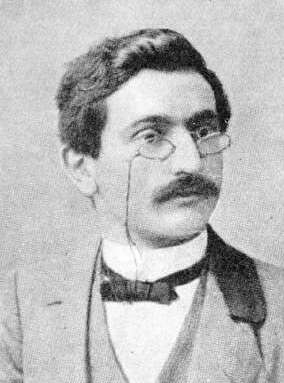
  • Emanuel Lasker (1868-1941), World Chess Champion from 1894-1921, PhD (or more precisely its German equivalent) in Mathematics from Erlangen Univ in 1902. Author of the influential paper "Zur theorie der moduln und ideale," Math. Ann. 60(1905)20-116, where the well-known Lasker-Noether Primary Ideal Decomposition Theorem in Commutative Algebra was proven (it can be downloaded for free here). Lasker wrote and published numerous books and papers on mathematics, chess (and other games), and philosophy.

  • Vania Mascioni, former IECG Chairperson (IECG is the Internet Email Chess Group), is rated 2326 by IECG (as of 4-99). His area is Functional Analysis and Operator Theory.
  • A. Jonathan Mestel, grandmaster in over-the-board play and in chess problem solving, is an applied mathematician specializing in fluid mechanics and is the author of numerous research papers. He is on the mathematics faculty of the Imperial College in London.
  • Walter D. Morris (196?-), International Master. Currently on the mathematics faculty at George Mason Univ in Virginia.
  • Karsten Müller earned the Grandmaster title in 1998 and a PhD in mathematics in 2002 at the University of Hamburg.
  • John Nunn (1955-), Chess Grandmaster, D. Phil. (from Oxford Univ.) in 1978 at the age of 23. His PhD thesis is in algebraic topology. Nunn is also a GM chess problem solver.
  • Hans-Peter Rehm (1942-), earned his PhD in Mathematics from Karlsruhe Univ. (1970) then taught there for many years. He is a grandmaster of chess composition. He has written several papers in mathematics, such as "Prime factorization of integral Cayley octaves", Ann. Fac. Sci. Toulouse Math (1993), but most in differential algebra, his specialty. A collection of his problems has been published as: Hans+Peter+Rehm=Schach Ausgewählte Schachkompositionen & Aufsätze (= selected chess problems and articles), Aachen 1994.
  • Kenneth W. Regan, Professor of Computer Science at the State Univ. of New York Buffalo, is currently rated 2453. His research is in computational complexity, a field of computer science which has a significant mathematical component.
  • Jakob Rosanes obtained his mathematics doctorate from the Univ. of Breslau in 1865 where he taught for the rest of his life. In the 1860s he played a match against A. Anderssen which ended with 3 wins, 3 losses, and 1 draw.
  • Jan Rusinek (1950-) obtained his mathematics PhD in 1978 and earned a Grandmaster of Chess Composition in 1992.
  • Jon Speelman (1956-) is an English Grandmaster chess player and chess writer. He earned his PhD in mathematics from Oxford.

Others that might go on this list would be Henry Ernest Atkins (he taught mathematics but never got a PhD, but won the British Chess Championship 9 times in the early 1900s), Andrew Kalotay (who earned a PhD in statistics in 1968 from the Univ of Toronto, and was a Master level chess player but was not formally given an IM chess ranking), Kenneth Rogoff (has a PhD in economics but has published statistics research papers and is a GM in chess), and Duncan Suttles (in the 1960s he started but never finished his PhD in mathematics, but is a chess GM).

Papers about mathematical problems in chess


Thanks to Christoph Bandelow, Max Burkett, Elaine Griffith, Hannu Lehto, John Kalme, Ewart Shaw, Richard Stanley, Will Traves, Steven Dowd, Z. Kornin, Noam Elkies and Hal Bogner for help and corrections on this page. This page is an updated version of that page and the other page.

2012-11-07

Anton Chekhov stories

This page aggregates the posts on Chekhov's stories from this blog.

Early stories (pre-1885)

Stories from 1886

Stories from 1887

Stories from 1888

Stories from 1889-1893

Stories from 1894-1904

Please let me know if there is anything missing!

Anton Chekhov - Stories from 1894-1904

This post gives a summary of the stories, novellas and plays of Anton
Chekhov from 1894 to 1804. If you know of things which should be
added, please let me know. Chekhov died of tuberculosis in June 1904.


Short stories


1894


1895


1896


1897


1898


1899


1900


1902


1903


Novellas


1895


1896


Plays


1896


1899


1901


1904


References


[C]
A. Chekhov http://en.wikipedia.org/wiki/Anton_Chekhov http://en.wikipedia.org/wiki/Anton_Chekhov_bibliography http://en.wikipedia.org/wiki/List_of_short_stories_by_Anton_Chekhov Stories of Anton Chekhov: http://www.gutenberg.org/browse/authors/c#a708
[Y]
Avrahm Yarmolinsky (translator and editor), The Unknown Chekhov Farrar, Straus and Giroux, 1999.

2012-10-29

Harrison Demchick’s on Screenwriting

Harrison Demchick gave a screenwriting presentation titled “From Book to Script to Movie” at the Maryland Writers’ Association Conference October 20, 2012 in Baltimore. He won the 2011 Baltimore Screenwriters Competition and has had one of his screenplays optioned. He is the author of forthcoming novel The Listeners (Bancroft Press, 2012) and works as a developmental editor with Writer's Ally, a creative services boutique. For more on Harrison Demchick, see harrisondemchick.com.

2012-10-22

Anton Chekhov - Stories from 1889-1893

This post gives a summary of the stories, novellas (if any) and plays of Anton Chekhov from 1889 to 1893. If you know of things which should be added, please let me know.


Short stores


1889


1890


1891


1892


1893


Novella


1891


The Duel

Note:
Wikipedia called this a "short story" as opposed to a "novella."

Summary:
http://litmed.med.nyu.edu/Annotation?action=view&annid=304

Text:
http://www.gutenberg.org/ebooks/13505

http://en.wikisource.org/wiki/The_Duel_(Chekhov-Garnett)

1893


An Anonymous Story

Note:
Alternate translations: The Story of an Unknown Man/The Story of a Nobody

Summary:
http://litmed.med.nyu.edu/Annotation?action=view&annid=12091

Text:
http://www.gutenberg.org/ebooks/13415

Plays


1889


1891


  • The Festivities


References

[C] A. Chekhov [Y] Avrahm Yarmolinsky (translator and editor), The Unknown Chekhov, Farrar, Straus and Giroux, 1999.
[Y'] Avrahm Yarmolinsky (Introduction), The Portable Chekhov, Penguin, 1977.