-
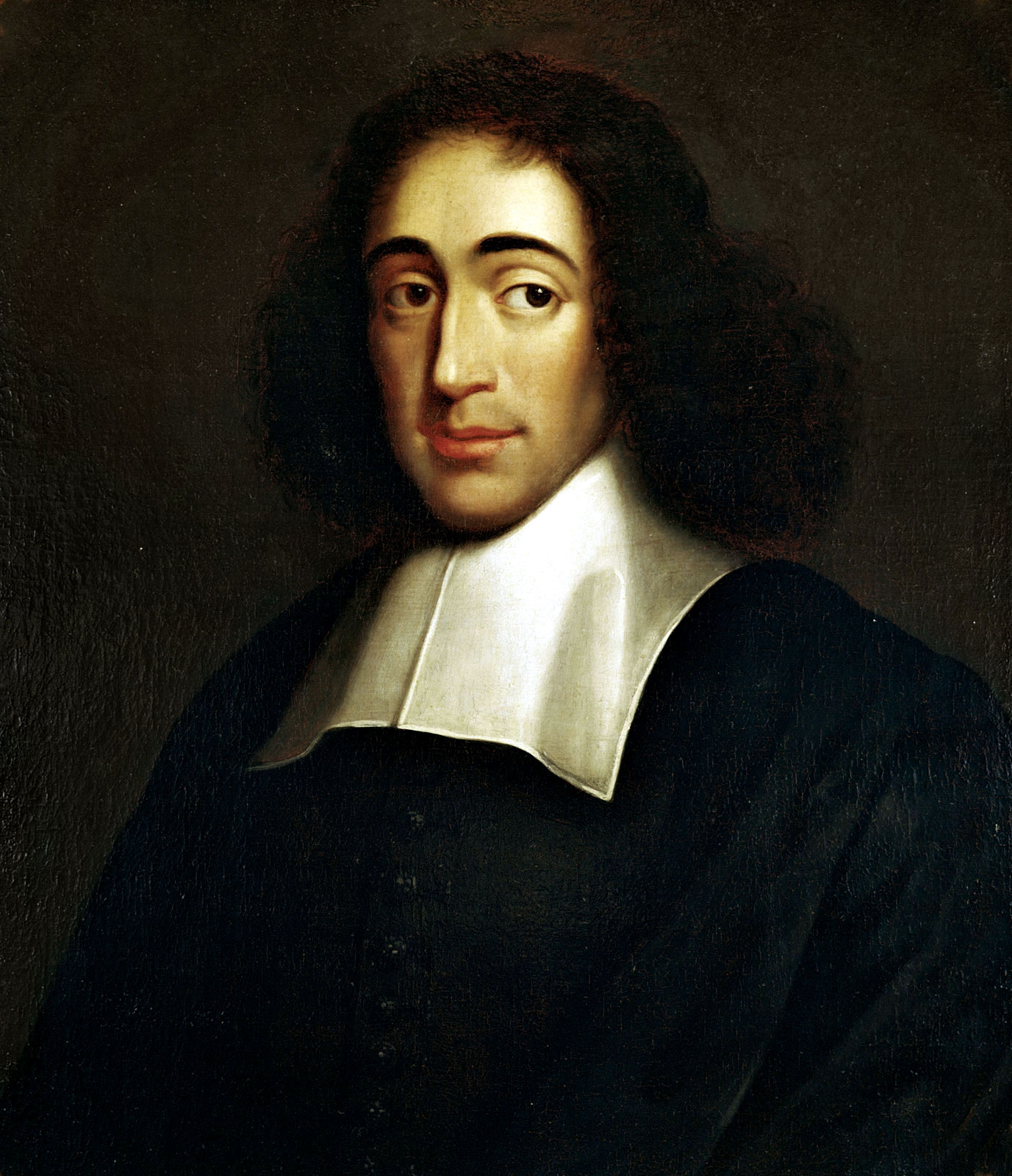
Steven B Smith, Spinoza, Liberalism, and the Question of Jewish Identity, Yale Univ. Press. Smith is a political science professor at Yale and a Spinoza expert. This is a book of how Spinoza’s philosophy influenced political science thought today and how he (in the 1600s) laid out foundational principles for the American democratic republic of today. Smith’s very clear writing and well-laid out arguments make this a terrific book for anyone (like me) who’s a Spinoza fan. I’m reading Smith’s next book, Spinoza’s Book of Life, now. Excellent so far.
- Zoe Quinn, Crash Override, PublicAffairs Books. This is an eye-opening account of how misogynists use the internet and social media to attack women. While specific to abuse of women in the video game community, these techniques have been refined and expanded to attacking politicians and journalists today (see Ezra Klein’s article from 2014 and the article of Aja Romano from 2021, among others).
- Michael Botvinnik, One Hundred Selected Games, Dover. I’m so impressed with this former world champion chess grandmaster. This book sent me down a rabbit hole trying to research his life. He was very self-disciplined and held down a full time job as an engineer, solving some important electrical engineering problems for the growing Soviet state, while pursuing the world chess championship title. Do I agree with his personal views? No. He once said Stalin wasn’t communist enough! But he’s also a Jew that not only survived but thrived in the Stalinist era, not an easy feat. My favorite part of each game was the one moment in which an ordinary looking chess move was made (that is, ordinary looking to me) and then the next line of Botvinnik’s commentary was “Of course, this was the move that lost the game.” Of all the games, I don’t remember even once predicting the losing move. I loved the commentary though.
- Mel Scult, volume 2 of Communings With the Spirit. This is the second volume in Mel Scult’s series of selections from Mordecai Kaplan’s diaries. Volume 1 was excellent and I’m reading volume 3 now. Kaplan (who died in 1983 at the age of 102) was IMHO one of the most important and profound philosophical thinkers on religion and American society. Like Botvinnik, Kaplan was another extremely disciplined worker. This is the volume where Kaplan explains his interest with Spinoza’s philosophy. While Spinoza’s precise influence isn’t clear from the diaries, the influence is clearly there. For more details on this connection, see for example the 2000 scholarly article by Shaul Magid, now a professor at Dartmouth College. I’m reading volume 3 of Scult’s series now. Excellent so far.
- Ben Westhoff, Fentanyl Inc, Atlantic Monthly Press. After my step-son Zach died, I wanted to learn more about how fentanyl reaches the USA, where it comes from, and so on. To be clear, when the press uses the work “fentanyl” it usually means a fentanyl derivative which has been cooked up to avoid export laws in China (where some exports are allowed even though use is illegal). While the situation on the ground is constantly evolving, this explains a lot about the origins in China of these narcotic products and the idiocy of the current US drug laws.
- Steve Kaplan, The Comic Hero’s Journey. This book should be paired with Kaplan’s earlier book, The Hidden Tools of Comedy. Steve Kaplan (no relation to my knowledge to Mordacai Kaplan) is a director and looks at comedy from that perspective. Before I read these books, I’d read lots of books on comedy and thought I had an inkling of comedic structure. I was wrong. These books, and Kaplan’s online courses, which go into detail on these books, really taught me a great deal. I may not be funnier but I understand comedic structure (and comedy screenplay structure) much much better as a result of Kaplan’s books and classes.
- Charles Deemer, Screenwright: the craft of screenwriting, Xlibris Corp (reviewed on this blog here). Deemer taught screenwriting for many years at the college level and this book distills the down-to-earth lessons from his classes. I liked that he presented a number of screenplay templates, such as the 3-act paradigm and some of its “spin-offs”. Deemer’s book is out-of-print but still available in paperback (on amazon, for example) or free from ibiblio.org, in html format, at this link. The online version is not only free but it’s expanded greatly in some sections, such as the examples of breakdowns breakdowns using one of his templates. I don’t want to say this is better than, say Dan O’Bannon’s book, Dan O'Bannon's Guide to Screenplay Structure, but it is in many ways similar and (like O’Bannon’s book) pleasant to read. O’Bannon is more of a Hollywood icon than Deemer. O’Bannon wrote or co-wrote the screenplays for, among many others, the classic movies Alien (the first in the franchise) and The Return of the Living Dead (the first of several sequels to George Romero’s Night of the Living Dead, which was co-written with John Russo - the complicated explanation of the sequels is discussed at this link). I like the organization of both of these books by Deemer and O’Bannon.
2021-12-27
Favorite books of the year 2021
Which books really affected me? Here’s my list. There are no math books, even though I did read a few. They are mostly philosophy or writing books, listed below in no particular order.

2021-10-18
3 act breakdown of "Meet the Robinsons"
Let's look at one of my favorite movies, the inventive and energetic Disney animation, Meet the Robinsons (2007).
 While overall quite a lot of fun, with a strong emotopnal theme, terrific music and memorable visuals, IMHO the film is complicated by too many subplots that don't contribute to the emotional core of the story. The description below skips a lot of these subplots. For a sequence breakdown that includes these details, see the blog post by Kirby Kirby Marshall-Collins, From Okay, But: A “Meet the Robinsons" Scene-by-Scene Breakdown. Despite these issues with subplots (which are IMHO relatively minor flaws in the story-line, but others may disagree), this is still one of my favorite movies.
Act 1: The Conflict.
Act 2: The Conflict intensifies.
Act 3: The Resolution.

The breakdown below follows the O'Bannon model [OL12], emphasizing the protagonist's Dramatic Problem arising from the Inciting Incident and the Point of No Return.
Note: The film goes back and forth in time using both flashbacks and a time machine. This in itself presents it's own set of plot problems which I'm also going to ignore.
Our protagonist Lewis (later renamed Cornelius) is 12, an energetic, science prodigy, and apiring inventor who's so far has spend his life in an orphanage. His roommate is Goob, another orphan who loves baseball.
So many potential adoptive parents have rejected him, Lewis is convinced that no one wants him. Mildred (voiced by the awesome Angela Bassett), the house mom of the orphanage, counters that they don’t know that; maybe his mom just couldn’t keep him. Lewis was the only one who saw her, so he decides to build an invention, his Mind Scanner, to look into the past and find his mom.
Lewis works on his Mind Scanner over months, keeping poor Goob up most nights building it. Finally, it’s the day of the InventCo-sponsored science fair. Goob can hardly stay awake but has an important event as well, a baseball game (he plays outfield). In fact, Goob falls asleep in the outfield and is, in fact, hit in the head by an easily caught ball. Because of that, they lose the game and his teammates are mad at him. Goob blames it all on Lewis, vowing revenge. Goob goes up hating Lewis.
At the science fair, an InventCo scientist, Mrs Lucille Krunklehorn (voiced by the legendary Laurie Metcalf) is a judge. Lucille's husband Bud will be important later but is not shown until later. (Bud and Lucille will later adopt Lewis/Cornelius.) Lewis barely notices young Franny, who has entered trained frogs into the science competition. (Lewis will later marry Franny the frog trainer.)
Lewis sets up his Mind Scanner machine. From the future, Bowler Hat Guy (BHG), an older and very disgruntled version of Goob, has arrived using a stolen Time Machine. Goob/BHG wants to steal Lewis' invention because he hates Lewis. Lewis' future 13-year old son Wilber follows BHG into the past in another Time Machine to try to stop him. (In this future, there are only two such Time Machines and the stolen Time Machine was Wilber's responsibility.)
In some sense, this defines BHG/Goob as the antagonist. This can also be regarded as the inciting event.
After BHG/Goob steals the Mind Scanner and returns to the future, Lewis is devastated. Wilber tells Lewis he's from the future and has a Time Machine. Lewis doesn't believe him. To prove it, Wilber tosses Lewis into his Time Machine and they fly away.
While traveling to the future, Lewis realizes he doesn't need a Mind Scanner, he can just use the Time Machine to see his mom. Wilber and he get into a fight over this and they crash the Time Machine in Wilber's front yard. Wilbur wants Lewis to fix the machine. Lewis bargains that if he fixes the time machine, Wilbur will take him back to see his mom. Wilbur agrees.
This is the Lock in.
Bowler Hat Guy attempts to pass off the Memory Scanner as his own at InventCo, but the CEO says he "hasn’t thought this through." (A recurring joke.) He can’t even figure out how to turn it on. They throw him out the doors of InventCo HQ.
Wilbur and Lewis push their broken machine into the garage. Even though Lewis keeps failing, Wilbur simply says, "Keep moving forward," his dad’s motto. Also, based on an actual quote:
We keep moving forward, opening new doors, and doing new things, because we're curious and curiosity keeps leading us down new paths. -- Walt DisneyBowler Hat Guy arrives outside, undetected. BHG uses a robotic hat to control Frankie, leader of Frannie's frogs. Frankie approaches the table to get Lewis, but he can’t capture him since he’s too small. Frankie warns BHG hasn’t thought this through. (Recurring joke 2.)
This failing, BHG (again using a robot hat) decides to get a dinosaur, a life-sized T-Rex, to get Lewis. The Robinsons band together to save Lewis from the T-Rex. T-Rex corners Lewis outside, but "big head and tiny arms" means that it can't grab Lewis. T-Rex warns BHG hasn’t thought this through. (Recurring joke 3.)
Franny and the other Robinsons invite Lewis to join their family. He's elated. Wilbur confesses the truth about the Time Machines. Realizing now who Lewis really is, they decide he needs to go back to his time and life his life.
Unfortunately, before this can happen, BHG/Goob captures Lewis. He offers to take Lewis to see his mom if Lewis fixes the Memory Scanner. Lewis fixes his Memory Scanner and learns BHG is Goob in the future. Lewis learns disgruntled future Goob knew just the moment to go back to, so as to ruin Lewis' life. Lewis tells BHG he's sorry about the baseball game and that if he’d let go of the past and kept "moving forward" his life would’ve turned out better. BHG would rather blame Lewis. (This also establishes part of Lewis' character arc.)
Done with Lewis, BHG takes Lewis to the now empty orphanage building (still in the future) and dumps tied up Lewis on the roof of the orphanage. Wilber recovers Lewis from BHG, stealing back the Mind Scanner as well. They almost make it back to the Robinson home when BHG/Goob catches up to them and takes back the Mind Scanner. BHG tries to remarket the working Mind Scanner to InventCo. BHG shows the scanner and signs the paperwork with the InventCo executives. This changes the future, causing Wilber to stop existing.
Before Wilber disappears, he tells Lewis that it's up to him - he must fix the Time Machine in the garage and go back to the science fair and stop BHG from originally stealing the Mind Scanner.
The world is darker. Lewis rushes into the Robinson garage. No one is there. The only thing there is a screen that shows what happened in the new dystopian future.
This is the Point of No Return.
Lewis scrambles to fix the machine, as the world gets darker and darker. Lewis goes back to the past, not to his birth mom but to the InventCo-sponsored science fair to stop BHG from taking his Mind Scanner.
Lewis stops on his way to the science fair to wake up Goob at the baseball game, who is sleeping in the outfield. Goob wakes up just in time to catch the ball and save the game. Everybody cheers for him!
At the science fair, Lewis pleads for one more chance. Lucille whispers a date to Lewis to plug in. The memory scanner works perfectly, showing her wedding to Bud, who has just arrived at the fair to drive Lucille home. A frog lands on Lewis, and Franny and Lewis finally notice each other. She asks if he thinks she’s crazy for training frogs to sing. He says no, and it's love at first sight.
Lucille and Bud love Lewis and decide to adopt him, but rename him "Cornelius." They move Cornelius into their house and show him what room will be the lab.
The emotional ending is accentuated by music from Little Wonders by singer/songwriter Rob Thomas.
Bibliography: [OL12]Dan O'Bannon and Matt Lohr, Dan O'Bannon's guide to screenplay structure, Michael Wiese Productions, 2012.
2021-10-10
Deemer's book Screenwright - a review
Charles Deemer wrote a 1998 book titled Screenwright: the craft of screenwriting. Last time I checked, lots of compied were available used at low cost. Then, in 2013, he revised it a bit as a hypertext e-book, but as a collection of html pages, not a hypertext pdf. Moreover, he posted it free online: hypertext Screenwright.
 I like this version for several reasons, but the main one is that's it's the only free, detailed discussion of screenwriting from an expert. His experience is detailed in his online resume and online biography. At this point, you the reader is thinking "hurry up and describe his system so I can get on with my day." Patience!

Another thing I like about his book: he doesn't advocate one system or another. He does present several systems, and spends a good amount of time devoted to the beginning writer exploring their own writing system. Are you a "tree person" (meaning basically you like to outline first) or a "forest person" (creation is discovery)? He even gives a "writing method preference test". Besides that, he does spend time discussing several methods. He discusses in some detail Syd Field's "3-act paradigm":
- The hook
- The complication
- The hero's call to action
- First act plot point, leading to the
- Hero's goal
- Midpoint plot point
- Act two plot point
- Hero's new goal, leading to the
- Climax and resolution
There's lots of details on the writing process, with encouragement and helpful advice on each stage of the process.
For more details, the table of contents is at this link. Check it out!
2021-04-05
Sinclair Lewis on writing with little time
In 1921 Sinclair Lewis wrote a short essay entitled "How I wrote a novel on trains and beside a kitchen sink." (Nine years before he won the Nobel Prize in Literature.)
 I first saw this article referenced in a quote by Tom Wolfe on the craft of writing. I googled for it and found it referenced in a blog, where someone commented on where it appeared. I tracked down the issues of The American Magazine (in the public domain and posted on the internet archive. Then I downloaded the huge psd and extracted the pages for the Sinclair Lewis article. You can download the three page article (as a pdf) by clicking here.

2021-03-16
Robin Swicord on adapting novels to a screenplay
Sundance Collab recently gave a fascinating master class taught by the great Robin Swicord on adaptations.
 It's free to watch her class (click on the video at the bottom of the page linked to above). You do have to sign up at sundance collab but you can do that without a credit card or anything like that. I'm just going to give you a selection of her three hour lecture so you can decide if you want to see the whole thing:

... Start making notes on what unique qualities describe the protagonist. And beyond that, look for the ways the protagonist hinders themself. When do they get in their own way? You also want to start to identify the antagonist -- that person or system that opposes the protagonist. If it's a system, what person or people would you consider inventing in order to represent that system in the story? One example that I can give you is the movie "Hidden Figures" that gave us in an insidious system that opposes the the protagonist. Standing in for that system is a composite character made up by the screenwriters Al Harrison played by Kevin Costner. History gave us Katherine Johnson a mathematician who worked for NASA, Margot Lee Shetterly gave us the facts in her well-researched nonfiction book, and the writers Allison Schroeder and Theodore Melfi crafted the screenplay. At each stage that story got shaped and told from the individuals point of view. When we work from history, there is no single objective truth. That is something to keep in mind if you are anxious about having to supply something that the story doesn't give us an order to make it more dramatic. There was no Al Harrison, but we needed him for the movie. Keep in mind that the protagonist shrinks to the size of their antagonist or their problem, so if you give a protagonist too small of a problem, it makes the protagonist seem smaller. When you give them an antagonist or problem of sufficient size, they become enabled and you see that in "Hidden Figures" where you have this very small ignoble little human problem of being denied access to a convenient bathroom in terms of a dramatic problem you think that's not that huge. But it was huge because that problem stood in for the much larger ennobling problem of systemic racism sexism that affected the women who worked at NASA. ...I can't embed her video but you can access the video from the sundance collab site https://collab.sundance.org/.
Brad Rushing on artistic motivation
Brad Rushing is a cinematographer who was recently interviewed on the youtube channel Film Courage. It was so insipring to me, I thought I'd post a few outakes of his interview. For more details, see the full interview.
Q: How do you keep faith in yourself and in your craft during turbulent times?
A: ... there was a time early in my career (early on in the 90’s) where I was so frustrated and so down and didn’t believe in myself and I just had this revelation You know what, I’ve set a goal. I don’t have to believe in myself. I just have to do the steps that I committed to doing to get me through the valley of the shadow of death, and that worked for me. It was a device that worked for me and I feel like occasionally I still have it. ... I just find that my brain is a little more complex in terms of the things it does to me. I don’t know that I am always in the driver’s seat and, quite honestly, I deal with self-esteem issues. I really do. I think a lot of people do in this business. Your identity is tied up in your work, even if you don’t want it to be because you put so much of yourself into it ... I do try and keep faith in myself and you know honestly when I do have crisis with the system or success is a nebulous thing I really get basic and I go back and remind myself: Brad you're an artist. That was the contract you made. You never said you wanted to be rich. I don’t care about being rich. I would like to be self-sufficient. I’d like to be secure. If I was rich it would be okay but I’d be donating, helping, and so on. I mean, I just don’t need a super yacht and an island. But I remind myself of the contract that I made was that I wanted to be an artist, simple as that.
For more questions and his wise advise, see the interview on Film Courage.
2021-02-10
Chris Mack on story design and character
Chris Mack (a creative executive on Netflix) and stage 32 presented a workshop on pitching a series idea to Netflix. The 3 hour workshop is online and free but you need to sign up with stage 32, locate the workshop in their education section, order it (which might require a credit card, but they won't charge it). If you don't have time for all that, see the attached for a sketchy version of only a small part of his presentation. He gave some good advice on story design and character, IMHO.

*****
Story design.
Key story questions:

- Who are the characters?
- What do they want? (internal goal and external goal)
- Why do they want it?
- How do they go about getting it?
- What stops them?
- What are the consequences?
Of the total creative effort in a finished work, 75 percent or more of a writer’s effort goes into designing story. [repeats the questions above] Finding the answers to these grand questions and shaping them into story is our overwhelming creative task.The last two questions of McKee can be revised to
- What are the central conflicts?
- What are the stakes?
Characters. Backstory. Traits. Arcs. Describe each of your main characters. Three key ingredients for a “rootworthy” character:
- Catalyst. (Underlying motivation or backstory, centered around one reason that feeds into their main goal. Think “call to action” or personal tragedy or inherently wanting to do the “right thing.”)
- Moral compass. (A set of rules the character sets for themself. This allows the audience to set expectations on how a character will act. Think fighting for the greater good or protecting their family or uncovering some hidden truth for the sake of justice.)
- Transformation. (What obstacles and challenges spur growth in the character? How do they handle themselves under trials? Note the trials and challenges must make sense given the character’s Catalyst. Their actions must be consistent with their Moral Compass. Think sacrifices made, learning to control their skills/power, overcoming hardships. Note that a character can have both an external arcs/transformation and an internal arc/transformation.
- The characters' wants, fears, and needs.
- How do/did they approach life?
- What motivates/motivated them?
- What choices did they make in the past?
- Moral - values and beliefs, (These give you ideas for emotional acrs for your characters.)
- Emotional/physical. (As an emotional arc, think going from honest to dishonest, unselfish to greedy, and so on. As a physical trait, ask how this affects their actions? For example, wild could lead to risky situations, tieless leads to being exploited, busy leads to unattentive, and so on. Subvert expectations. What if they are strong but are also insecure? What if they are ugly but very confident?)
- Personality quirks. (Are they friendly, adventurous, timid? Ambitious? Thoughtful? Combine characters that have opposing personality traits. Think The Odd Couple.)
See Chris Mack's excellent presentation for more details!
Subscribe to:
Posts (Atom)